
Where the Shade Falls
Ema is a Somers Town resident, textile designer, and community practitioner whose work brings together textiles, storytelling, local history, and lived experience. As a community storyteller for the Melting Metropolis project, she has been exploring how people in Somers Town experience rising temperatures, and the everyday ways they find shade, keep cool, and care for one another. Her developing artwork, Where the Shade Falls, has grown through conversations with local residents, creative workshops, and research into the Somers Town archive. In this blog, Ema reflects on how memories of water, communal washing lines, and shared outdoor spaces are beginning to shape an installation about heat, protection, belonging, and community care.
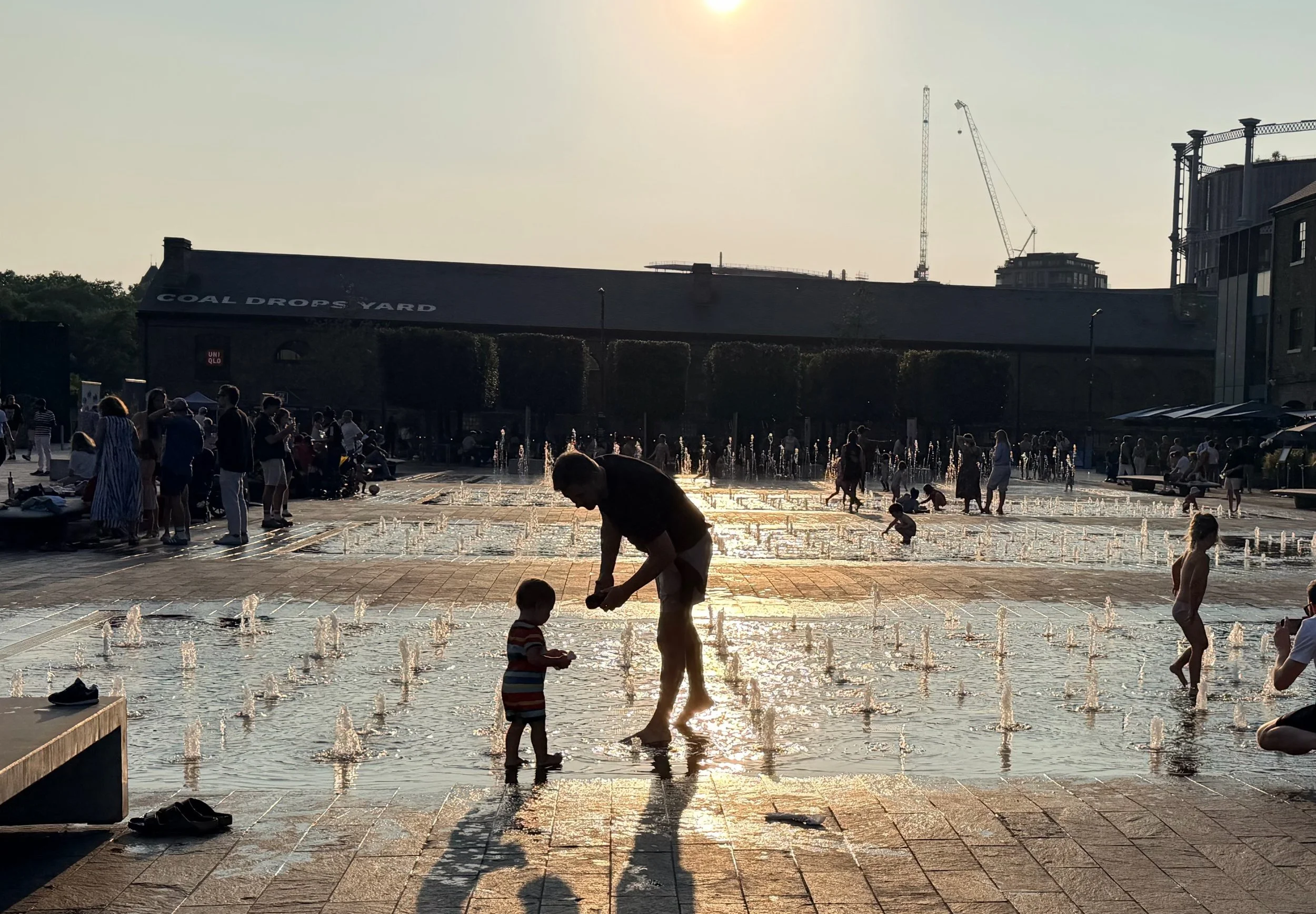
Children and families cooling off in the fountains at Granary Square, King’s Cross, photographed by Ema Howling.
Over the past few weeks, my project has continued to develop through conversations, community workshops, and archival research. Rather than beginning with a fixed outcome, I have been allowing the people of Somers Town and their stories to guide the direction of the work.
I started by making a series of sample badges using words collected from local people. These allowed me to experiment with how language might become part of the final installation. Since then, I have been exploring these ideas with my Sew Social group and members of the Gingerbread community, asking people what comes to mind when they think about heat, keeping cool, and the ways we care for ourselves and each other during hot weather.
Alongside the workshops, I visited Plot 10 and spent time exploring the Somers Town archive. Looking through photographs of summers gone by, I was struck by how often children found joy and relief through water, whether that was through paddling pools, slip-and-slide games, or outdoor showers. These images reminded me that adapting to hotter cities is not only about creating shade, but also about ensuring people have access to water and shared places where they can cool down together.
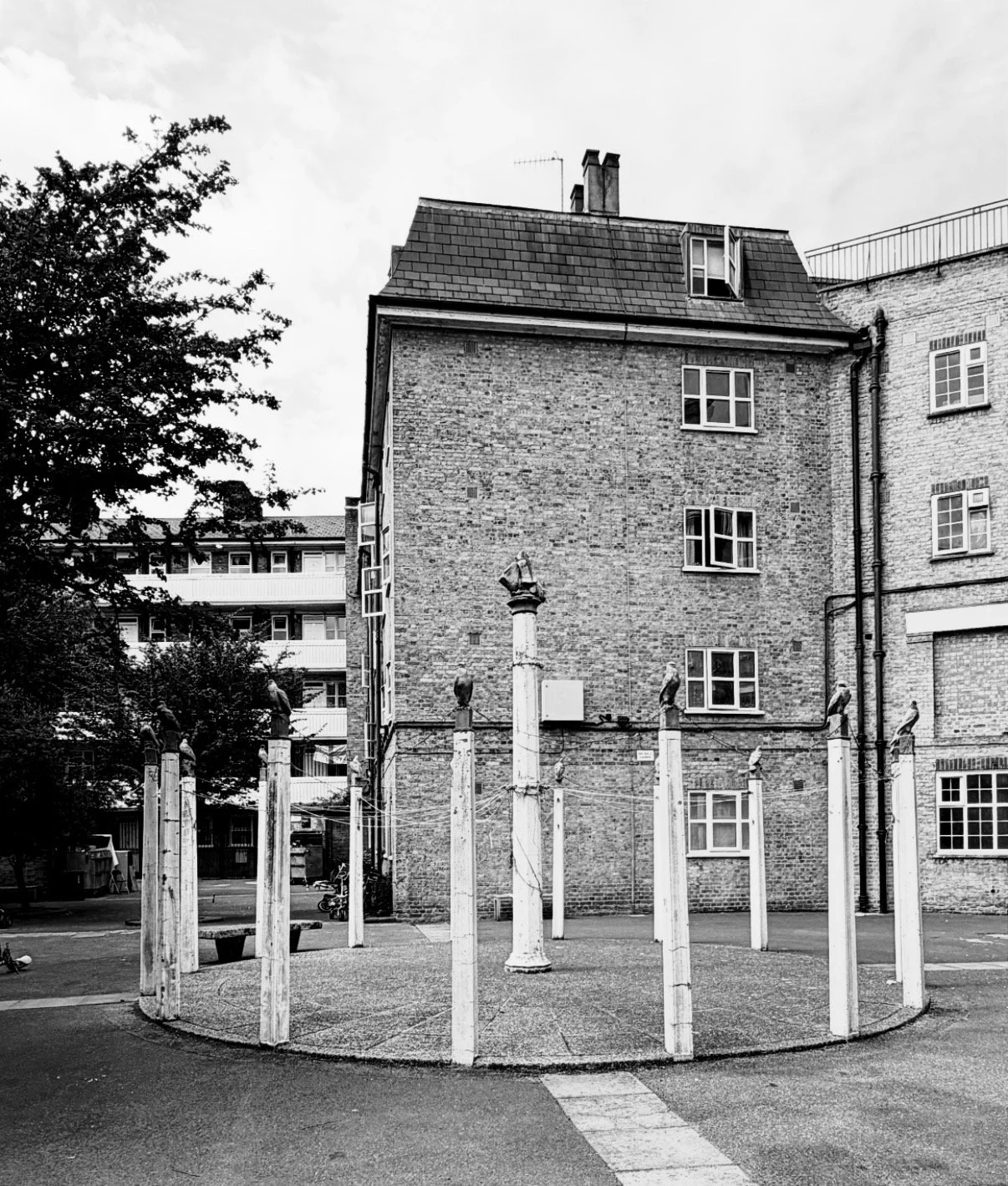
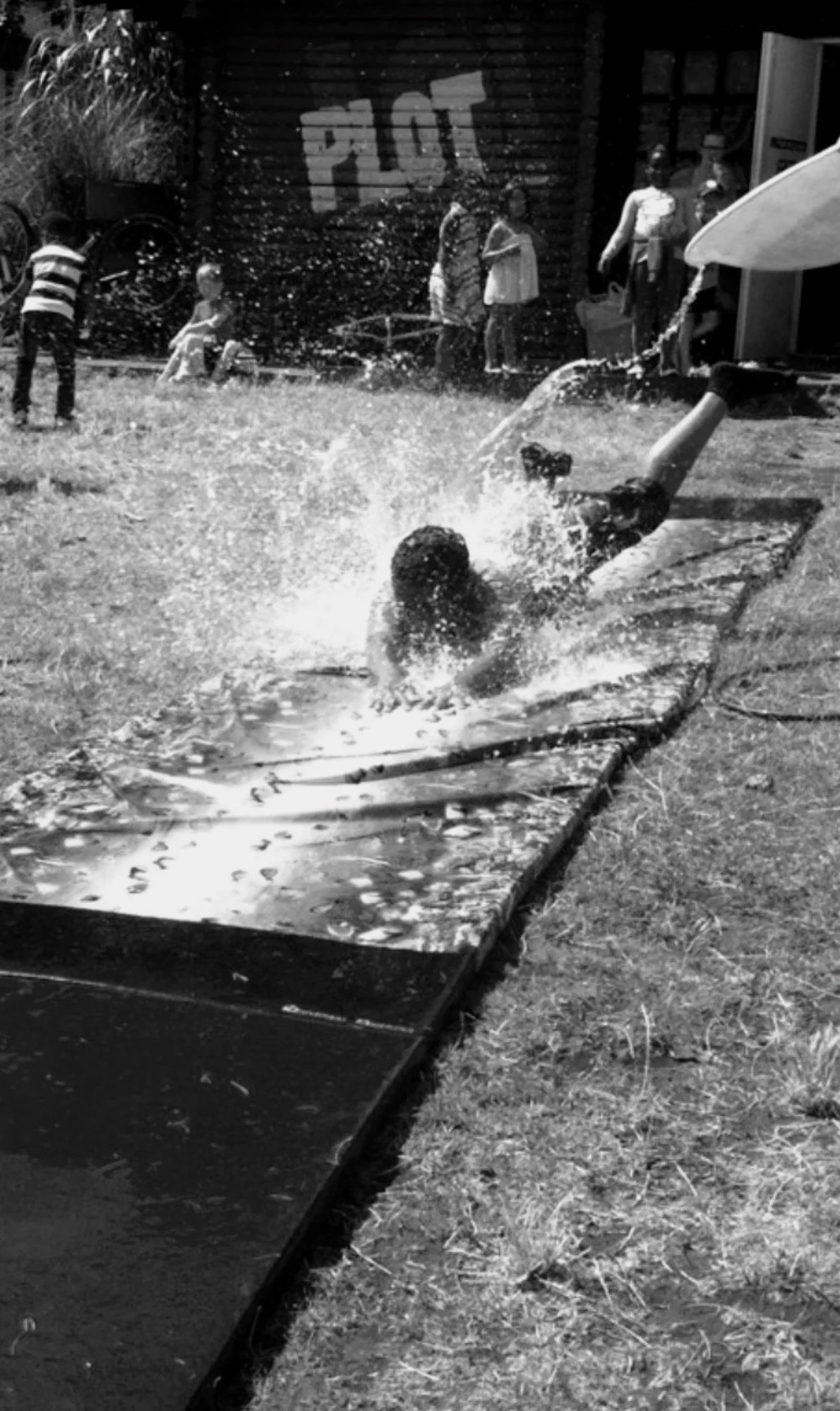
Left: Communal washing-line posts on a residential estate in Somers Town, photographed by Ema Howling. Right: Children enjoying a slip-and-slide activity at Plot 10 in Somers Town. Photograph supplied by Sally Warren and reproduced with her permission.
My installation, Where the Shade Falls, is continuing to evolve around the image of an umbrella. At the moment, I imagine words representing the intensity and effects of heat appearing on the outside, while underneath, in the shade, will be words people have shared about comfort, kindness, protection, healing, and community. The umbrella becomes both a practical shelter and a metaphor for the ways we look after one another.
Another area of research that is becoming increasingly important is the history of Somers Town’s communal washing lines. These were never simply functional places where clothes were hung out to dry. The shared courtyards and drying yards were places where neighbours met, women talked, children played, and everyday community life unfolded.
Many of the washing-line posts were decorated with colourful ceramic finials designed by sculptor Gilbert Bayes during the 1930s. Inspired by nursery rhymes, fairy tales, and familiar stories, they brought art into the heart of the housing estates. Some of the original finials have disappeared, while replicas and empty posts can still be seen around Somers Town today.
I keep returning to these washing lines because they represent much more than laundry. They mark the places where people gathered, exchanged news, watched over children, and cared for one another. They were part of the everyday social fabric of Somers Town.
I am now considering whether the washing line, its posts, or the circular forms of the finials could become part of Where the Shade Falls. The idea is still developing, but it creates an important connection between Somers Town’s history and the ways communities continue to support one another during periods of extreme heat.
As the project continues, I want to keep listening before deciding on the final outcome. Every workshop, conversation and archive visit adds another layer to the work. This will help ensure that the installation reflects the voices, memories, and experiences of Somers Town rather than presenting a single narrative.
I’m excited to see where this next stage of research and making leads.