
\Summer Day Thoughts \\ Somers Town Walks\
How does one make heat visible? What are the embodied experiences of heat and summer for ones in Somers Town, London? What does heat mean to me, growing up in a hot, tropical town on the southwestern coast of India? As one of the community storytellers for the Melting Metropolis project, I try and answer these questions by embedding myself in place; in Somers Town, London, a place and people that I have begun calling my own in the last few years, observing how its urban environment adapts to heat, watching how its people move and behave in the sun, and, in the process, thinking about what summer means to me.
For such a global, multicultural neighbourhood in the heart of Central London, one that predominantly lives in social housing, what does its relationship with the sun, the heat, and memory look like?
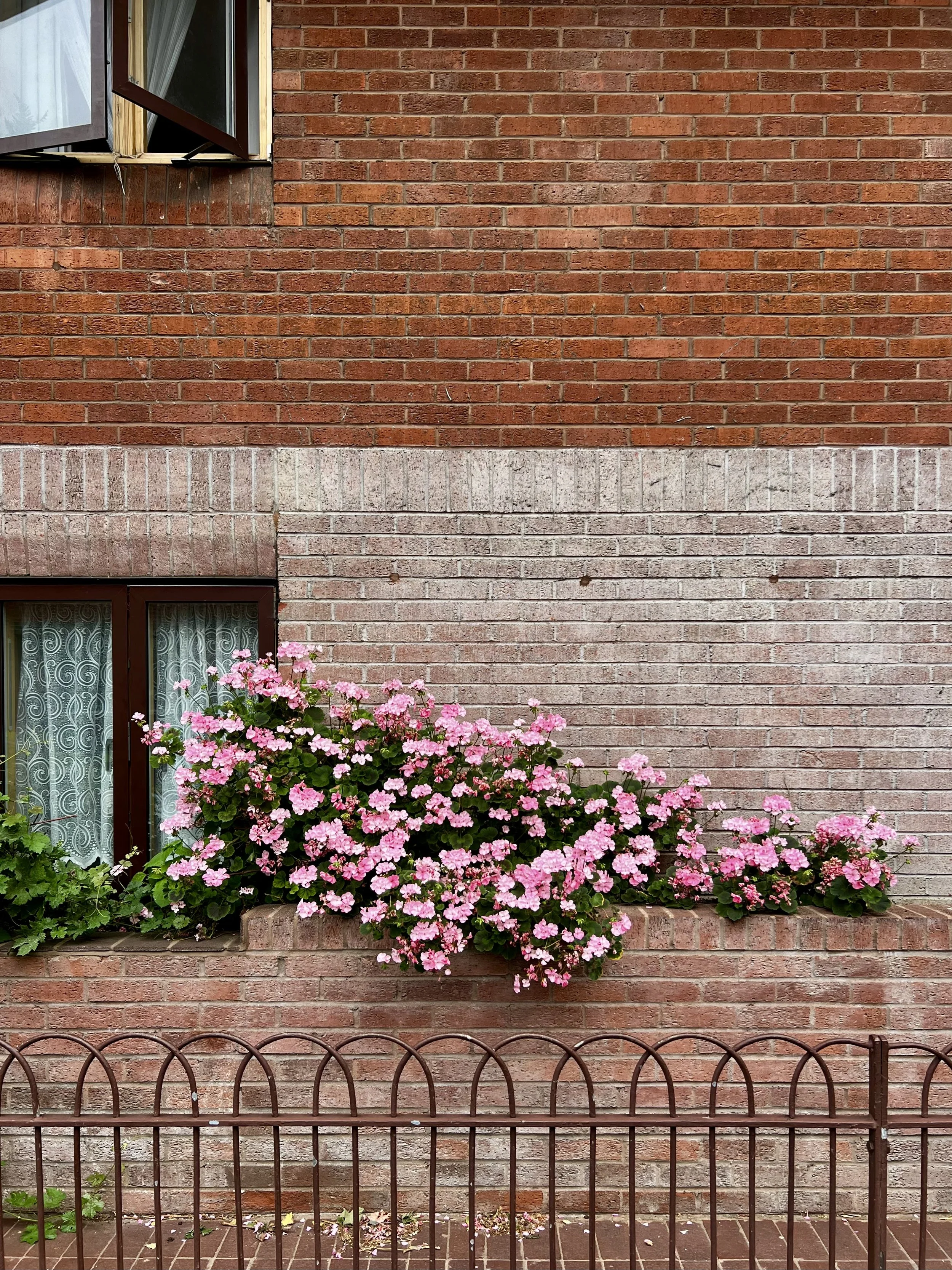
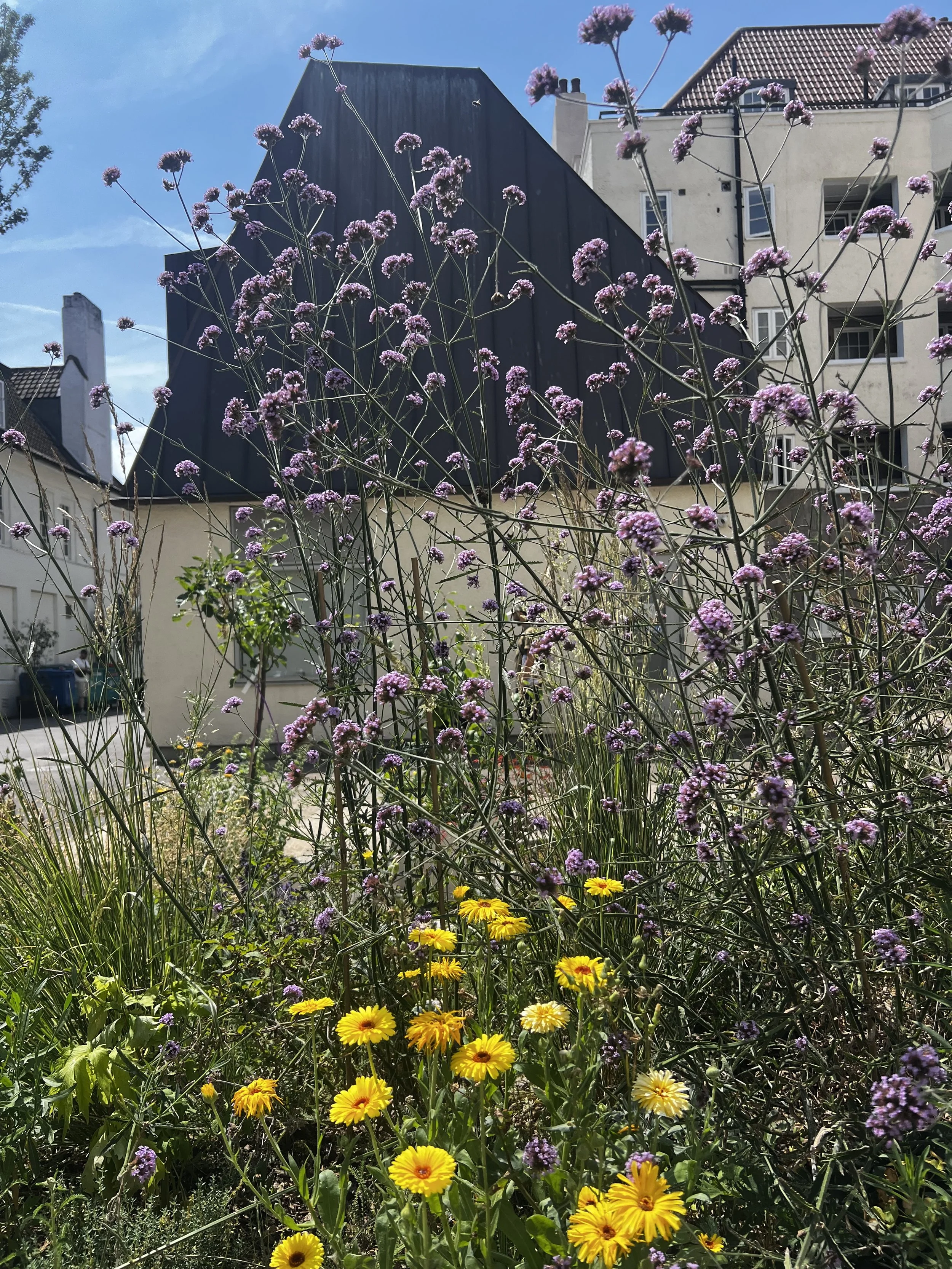
This June, as London sees its mid-30 degree Celsius days, I set out to observe Somers Town more attentively than I ever had. I draw, I keep a diary, I consciously step out on hot days to find clues of visible heat, I meet people along the way, I stop, wave and speak. I believe I have settled well within the community, and yet, as I walk its streets looking for signs of adaptation; of temporary canopies on balconies, of curtains drawn over windows with the tube of an air conditioner poking out, of flowers filling the very many mini gardens, playful courtyards and quiet streets, I begin to notice how different summer looks here.
I slowly take in the quiet of Somers Town amidst the extreme busyness of its neighbouring Camden, King's Cross, and Euston, where people move like ants from a termite hill on a hot day. Then, where have all the people on the streets of Somers Town gone? Are they indoors, shut in their homes, trying to cool themselves? Or out on a train to a beachside? Maybe, just around by the canal or Granary Square' water fountains. I don't know.
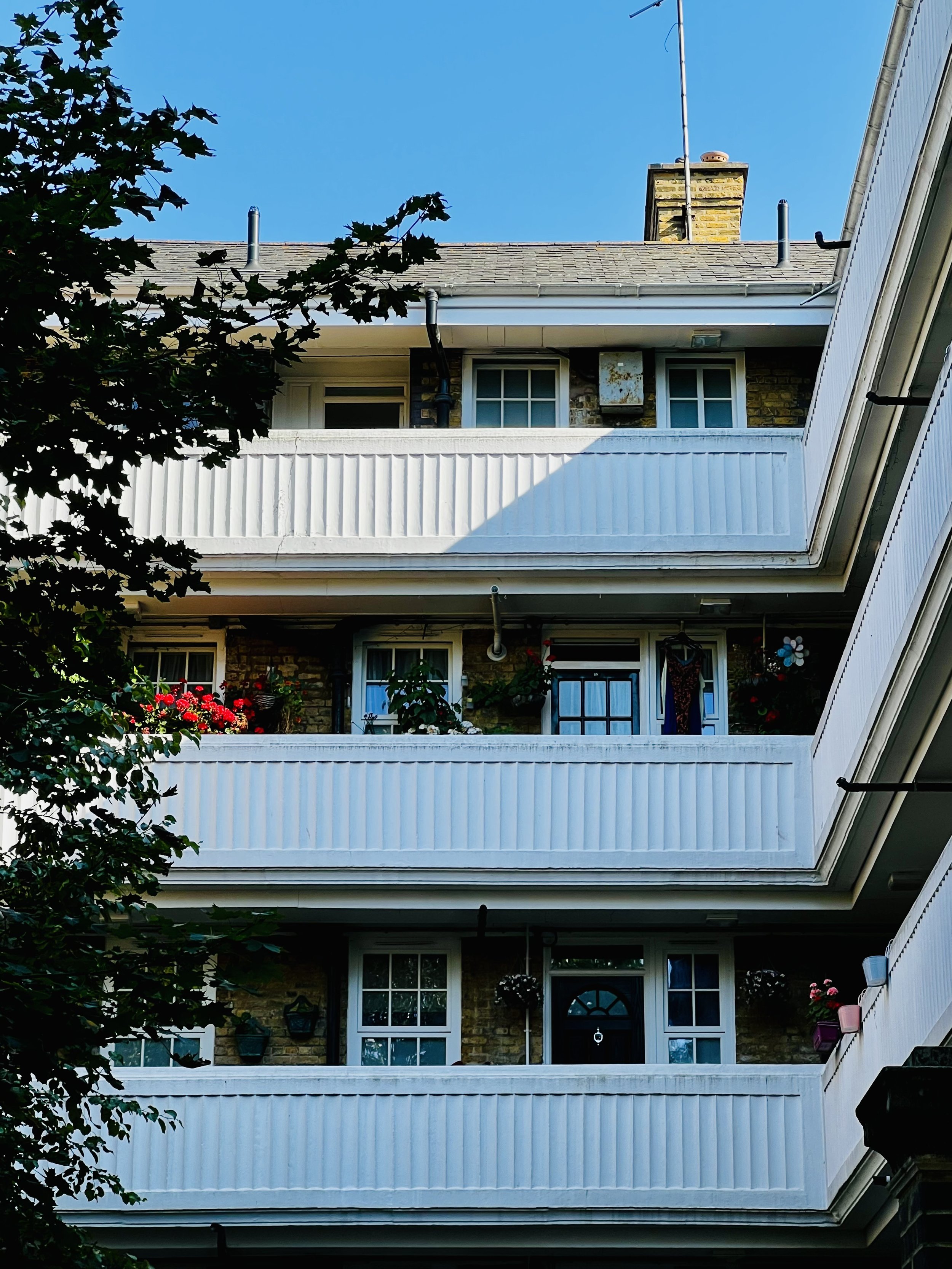
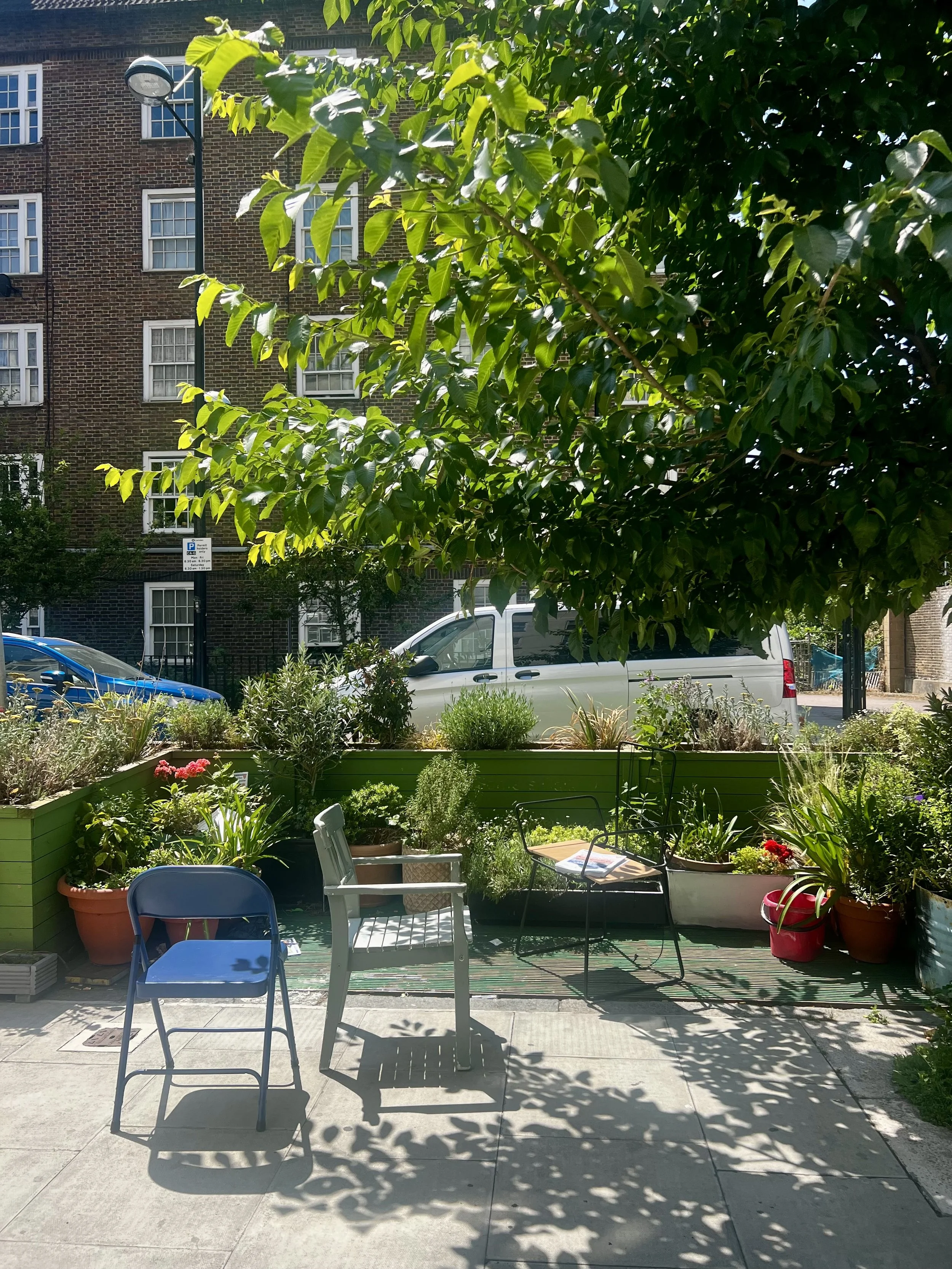
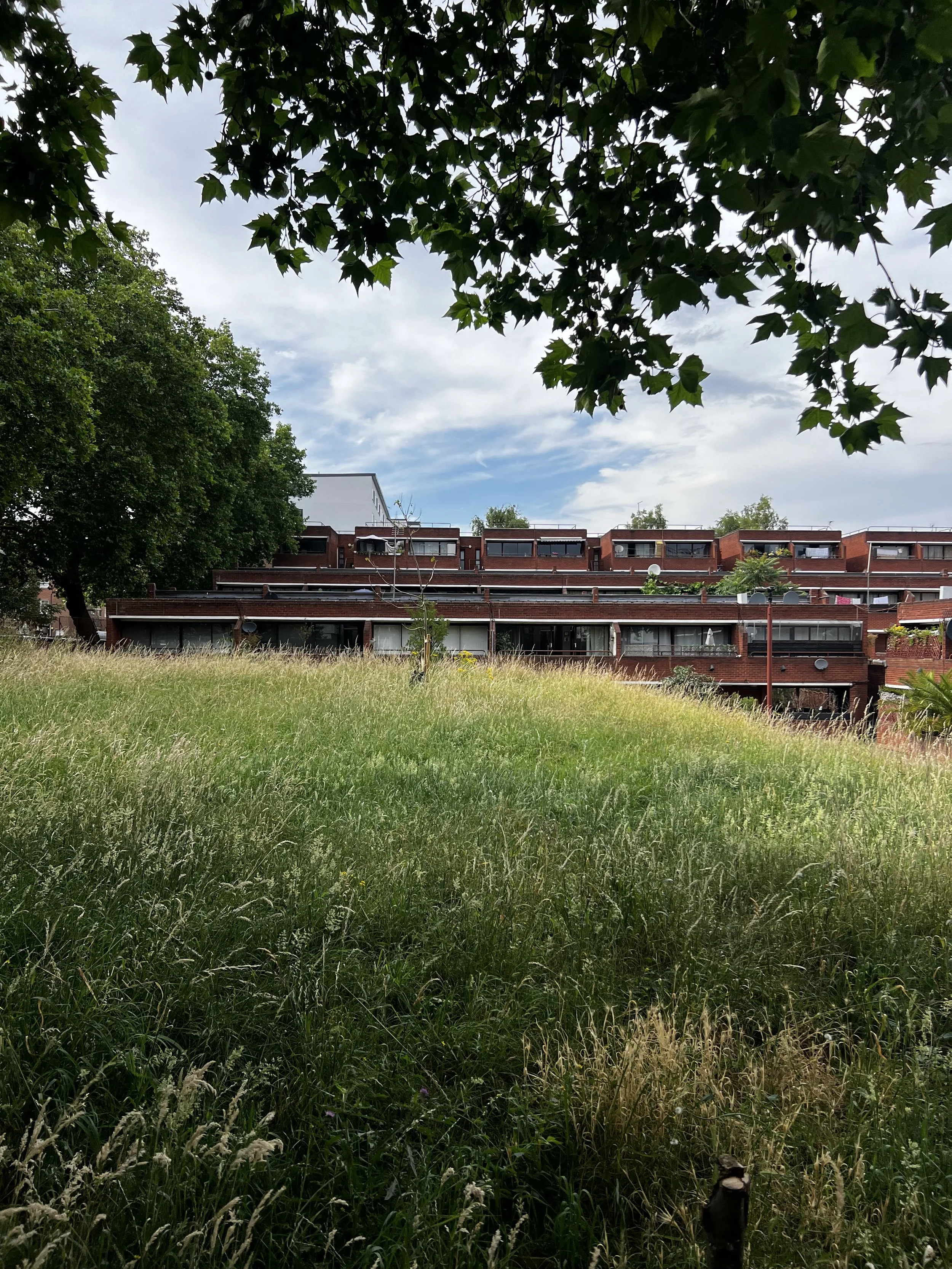
Turning back to the streets themselves, I begin to read the architecture of these estates, and to hold it up against the idea of summer that lives in me. I walk along the brick facades of the estates, taking in the colours of Somers Town (its terracotta, its grey asphalt, its green trees) and the way the sun falls across its facades. Here, I see the glaring sun pierce through the windows of the higher floors, while below, the streets remain protected by dense foliage. I'm reminded that these trees were only planted in recent history. Looking at archival images of the estates, I see the grandeur of the original design, the architects' drawings where the trees are not really shown. So while today's trees have long since taken root, it is only in a more recent past that these streets have come to enjoy their shade.
I had once searched for images of ‘summer’ online, I found holiday pictures on white sandy beaches, people sunbathing with cocktails in hand, colourful sundowner parties, of sun and leisure; but that was never summer to me. And I found myself asking: is this the summer Somers Town also knows? Being so multicultural, I'm certain that within its homes and estates live memories and cultural knowledge carried from ancestors, from another land, from rituals that may have diluted over time but remain within each family's familiar knowledge. What are Somers Town's summer rituals, I wonder: the seasonal festivals, the food that changes with the season, the temporary shading that goes up as the sun grows hotter by the day?
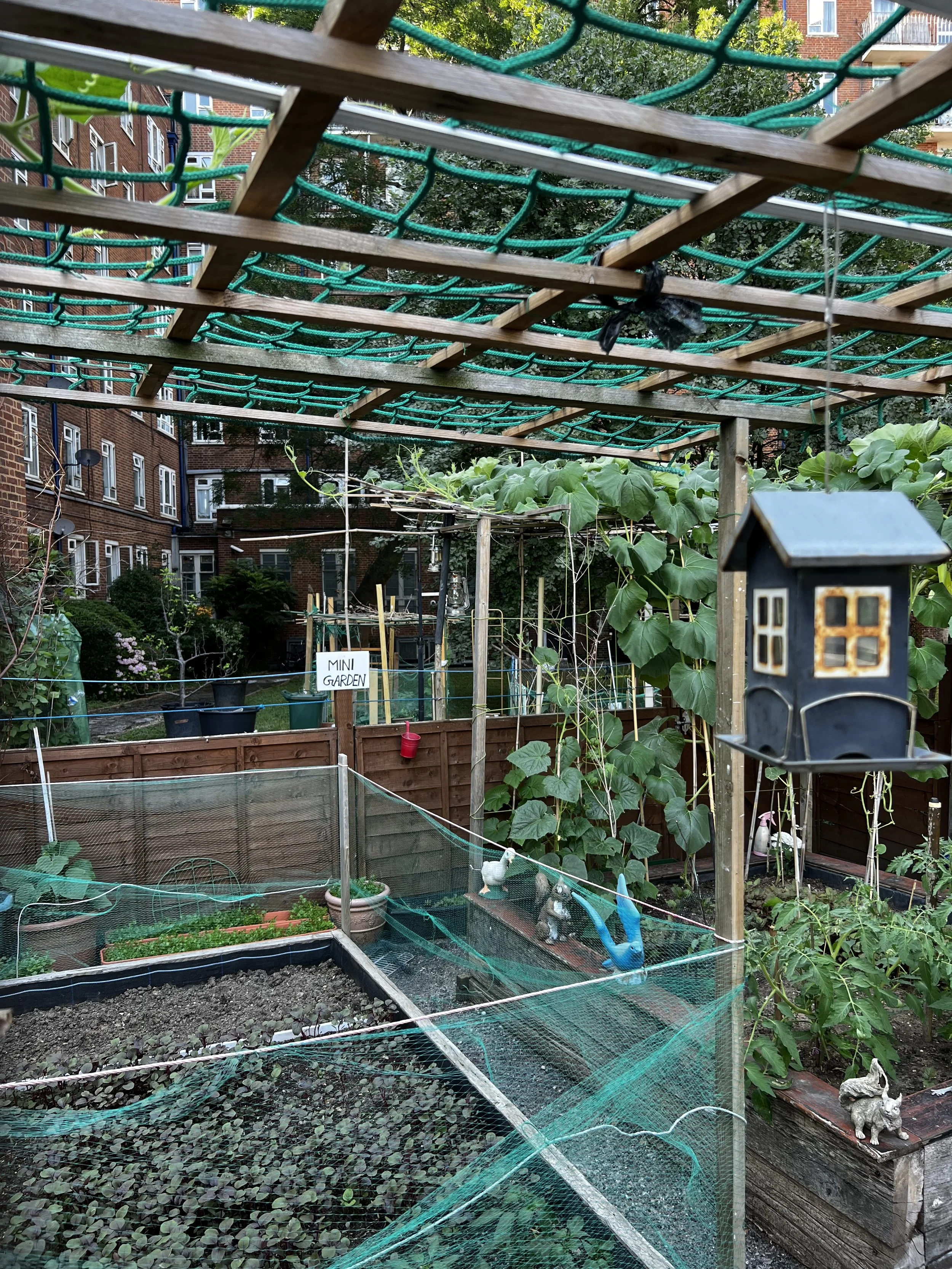
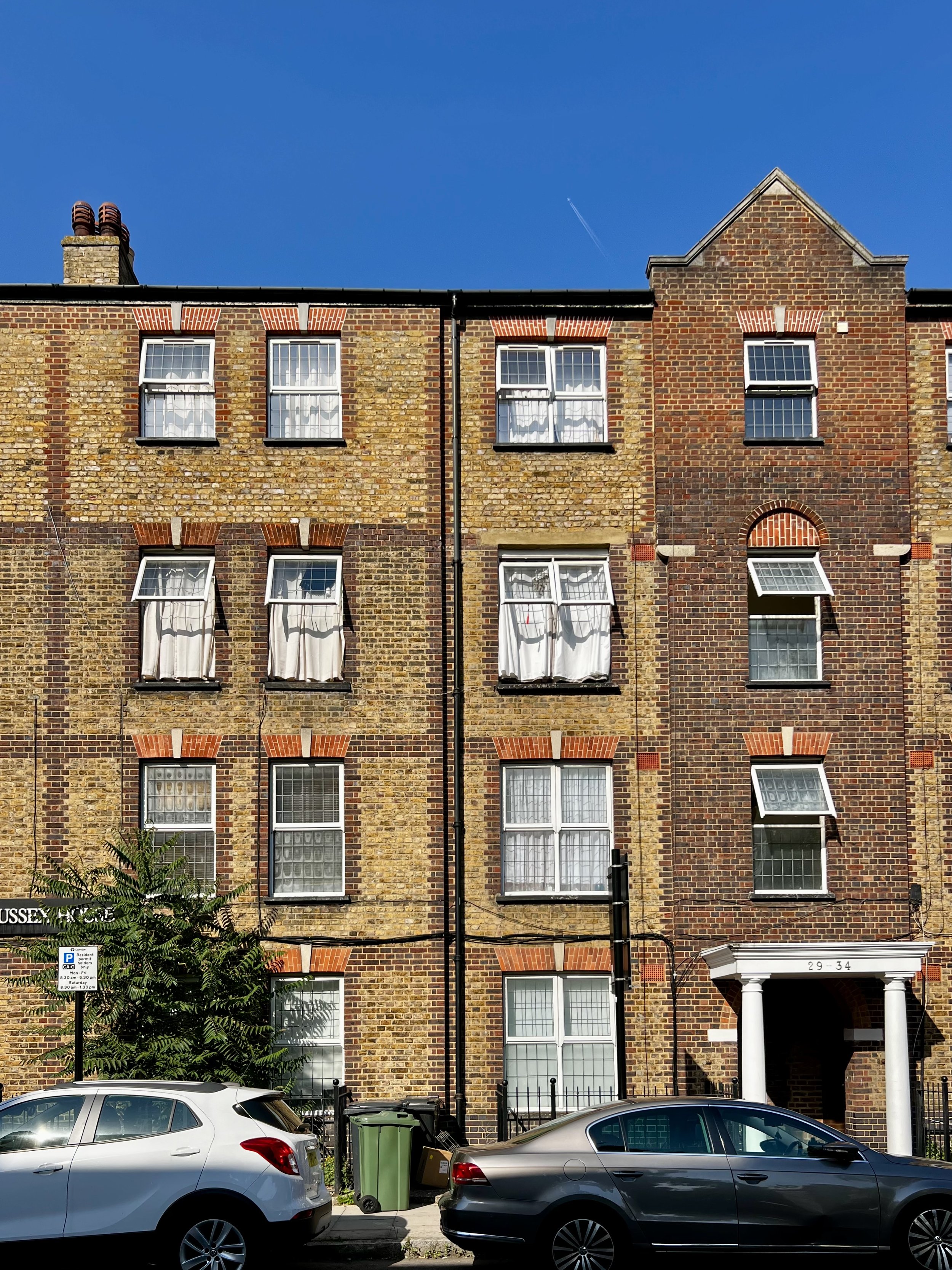
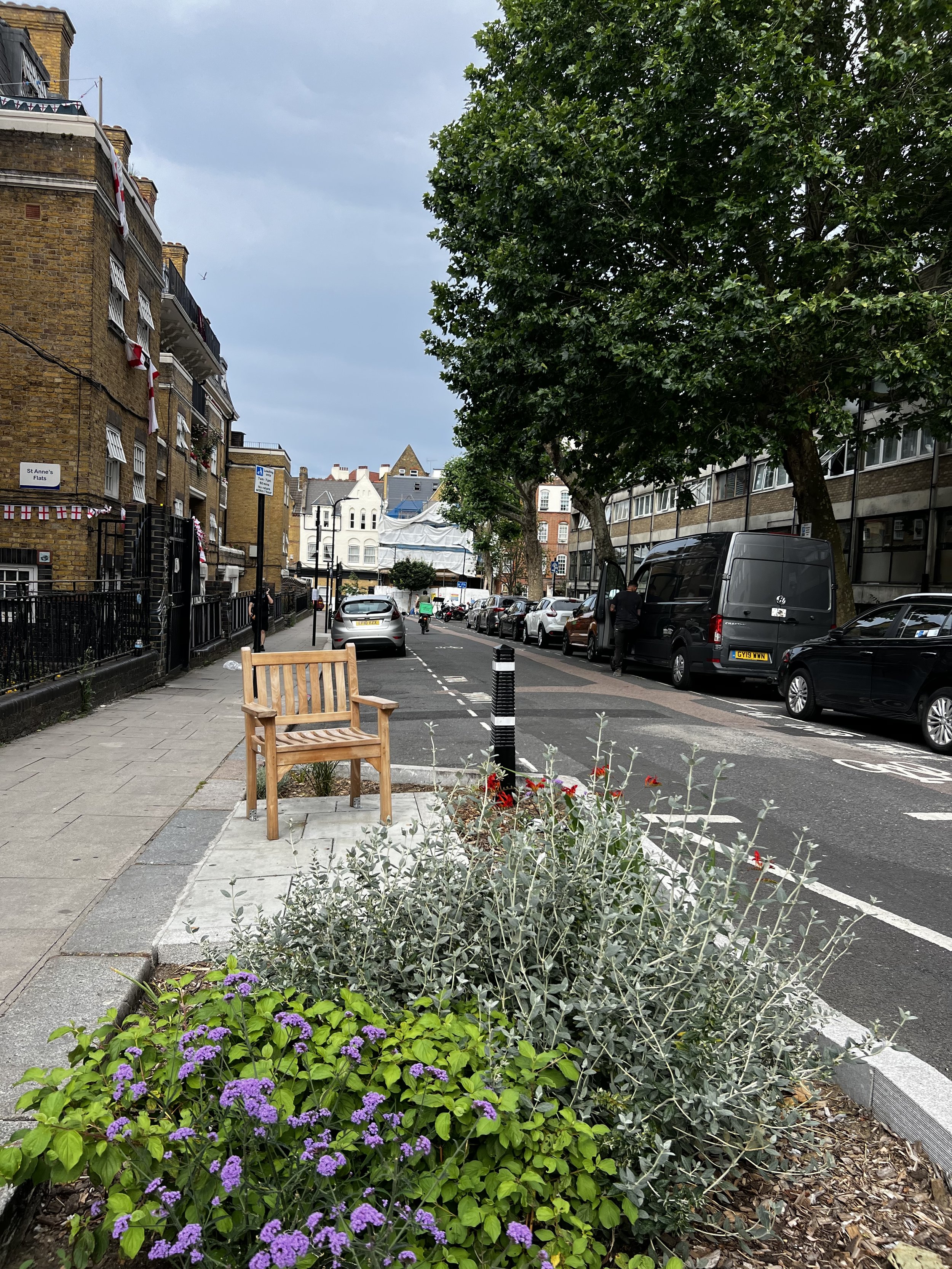
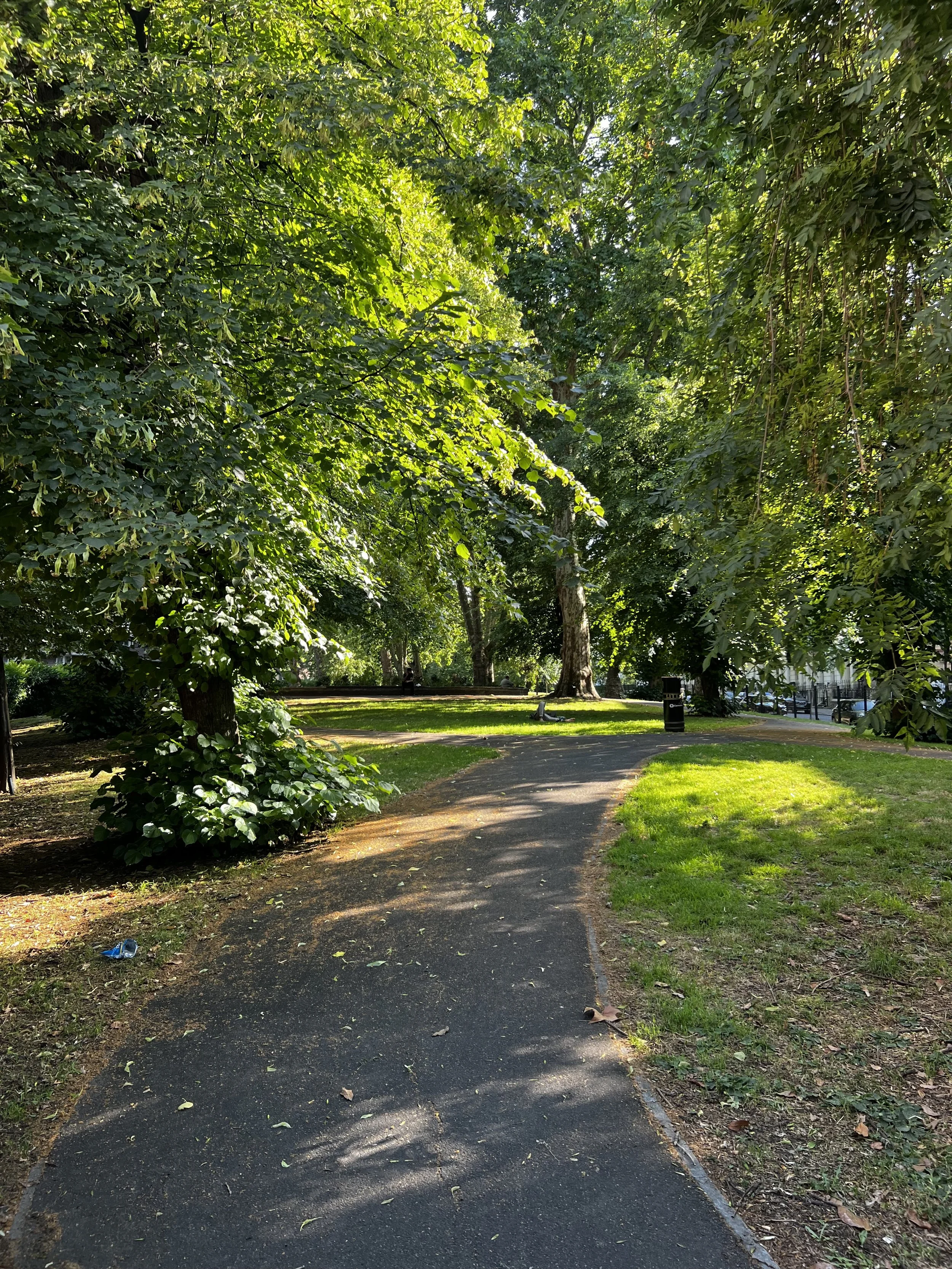
I can't help but compare my own idea of heat and summer to the one I see on these streets. As I walk along the quiet roads of Somers Town, I recall the busyness of a hot day where I grew up: street vendors with shaded canopies over their carts, children climbing mango trees heavy with fruit, markets filled with jackfruit, cashews, and the other gifts of the season, men and women carrying colourful umbrellas to shade themselves, sweaty bodies carrying on with life as heat is nothing at all, farmers and their families as they tied bundles of paddy into bales, and the dance and drama rituals that would emerge on those dried fields just before the monsoon broke. As an architect, I find myself thinking of every project where cross-ventilation, courtyards, verandas, and cool oxide flooring were simply a natural part of the design, where trees were placed deliberately to shade the right window. All of this was once integral to how I thought. I think of my grandparents weaving palm leaves to build a shade each year, protecting our backyard from the heat, and of my grandmother laying a fresh layer of cow dung across the floor to cool what would otherwise be an unbearably hot yard. I wonder how these rituals, so tied to the land I come from, might already live somewhere within Somers Town itself.
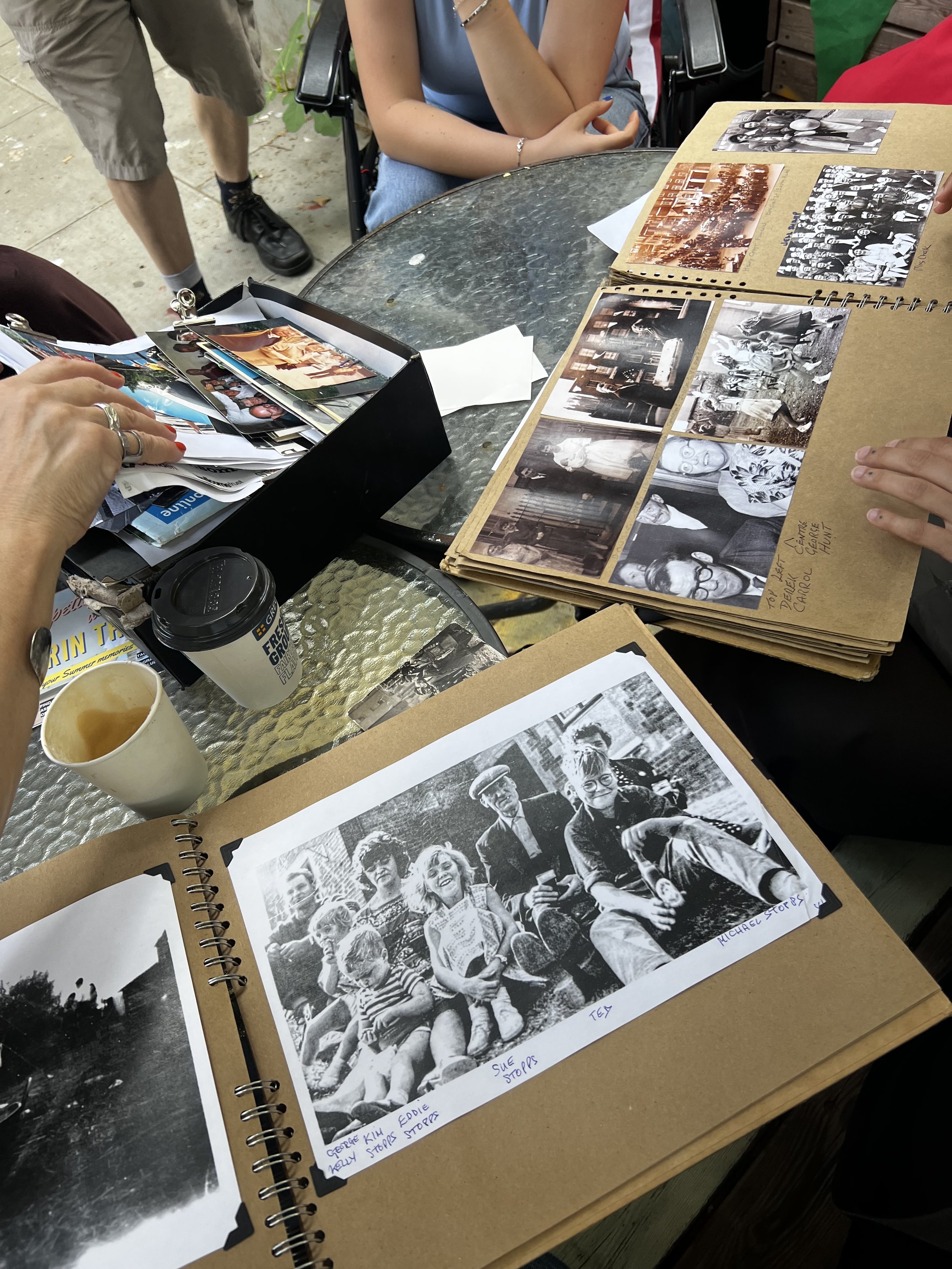
I will now look for the public and private stories of heat in the neighbourhood, in its archival images and oral histories: for rituals that have found their way into Somers Town. I will continue to observe and draw, and in those drawings, patterns of memory will begin to emerge. Through informal conversations with people here, I shall continue gathering stories: of flowering balcony competitions, of people wanting to cover their windows from the outside, of a day too hot to walk to Camden for milk, a day too hot to cook, of sun-stroked boys walking the streets with fans still in their boxes, of benches beneath the trees filled with people lounging through the blistering heat. These are the fragments I am after: the songs, the food, the flowers, the rituals and routines that make a day, and that make a summer.
Drawing on my earlier research work on subaltern narratives as a way of studying the history of a place, I hope this project in the next couple of months looks at the stories of everyday people and their rituals and routines with sun, summer, and heat. And just like Somers Town's rich diversity, the stories I gather will celebrate its multiplicities of memories.