Listening for Heat
Community Artist Bhana reflects on her creative methods, and the influence that the themes of the Melting Metropolis project have had on her practice.
When people imagine community art projects, they often picture making something together- a mural, a piece of street art, an exhibition, a garden. What interests me just as much is the process that happens beforehand: the conversations and moments of human connection felt in an embodied way; relational and affective information; subtle exchanges that shape what eventually gets made. I often find myself asking what deserves to be documented, and how we might become attentive to forms of knowledge that are easy to miss precisely because they seem small or ordinary, but may be deeply intuitive.
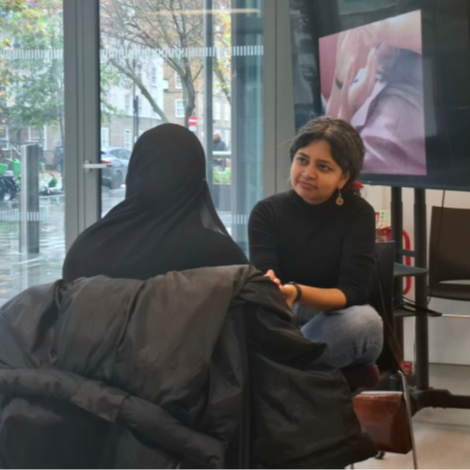
As a community artist on the Melting Metropolis project, I have been exploring how listening, touch, and shared attention might become artistic materials in their own right. My approach draws on Buddhist practices of embodied attention and the more formal artistic research methodology I developed during my MA. It is a structured way of working that treats practice itself as a knowledge-generating system, moving and refining distinct phases of defining a question, gathering raw material from the world, creative processing, curation and exhibition, with rigorous documentation and critical reflection at each stage. Artistic labour, for me, is also epistemic labour, and that is what excites me most about this work. As part of the work commissioned by Melting Metropolis, I have been developing a body of material that will eventually form the basis of a mixed-media artwork. The work draws on recordings of conversations, clay impressions, drawings, and written reflections gathered through a series of one-to-one encounters at the Somers Town Community Association.
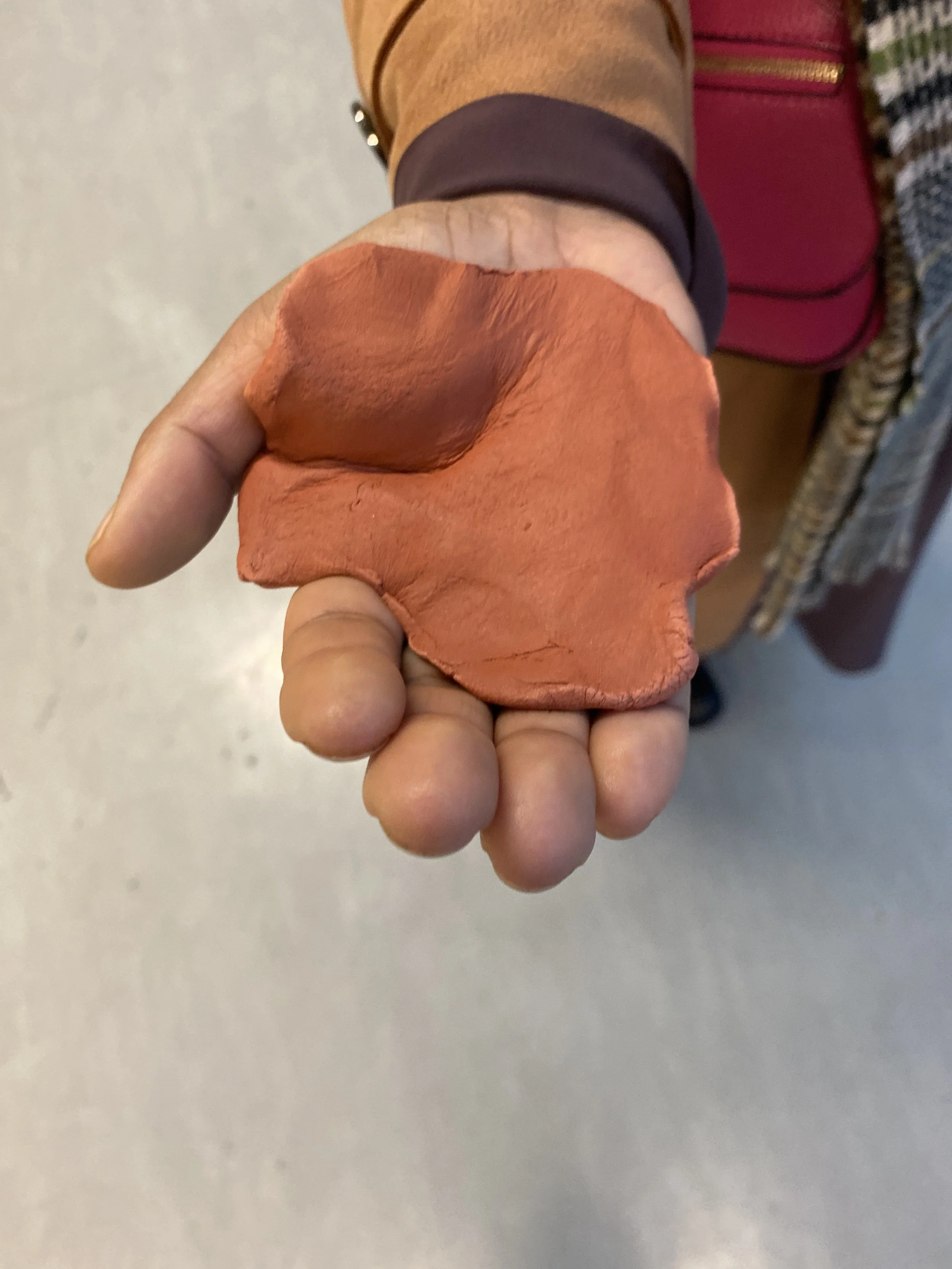
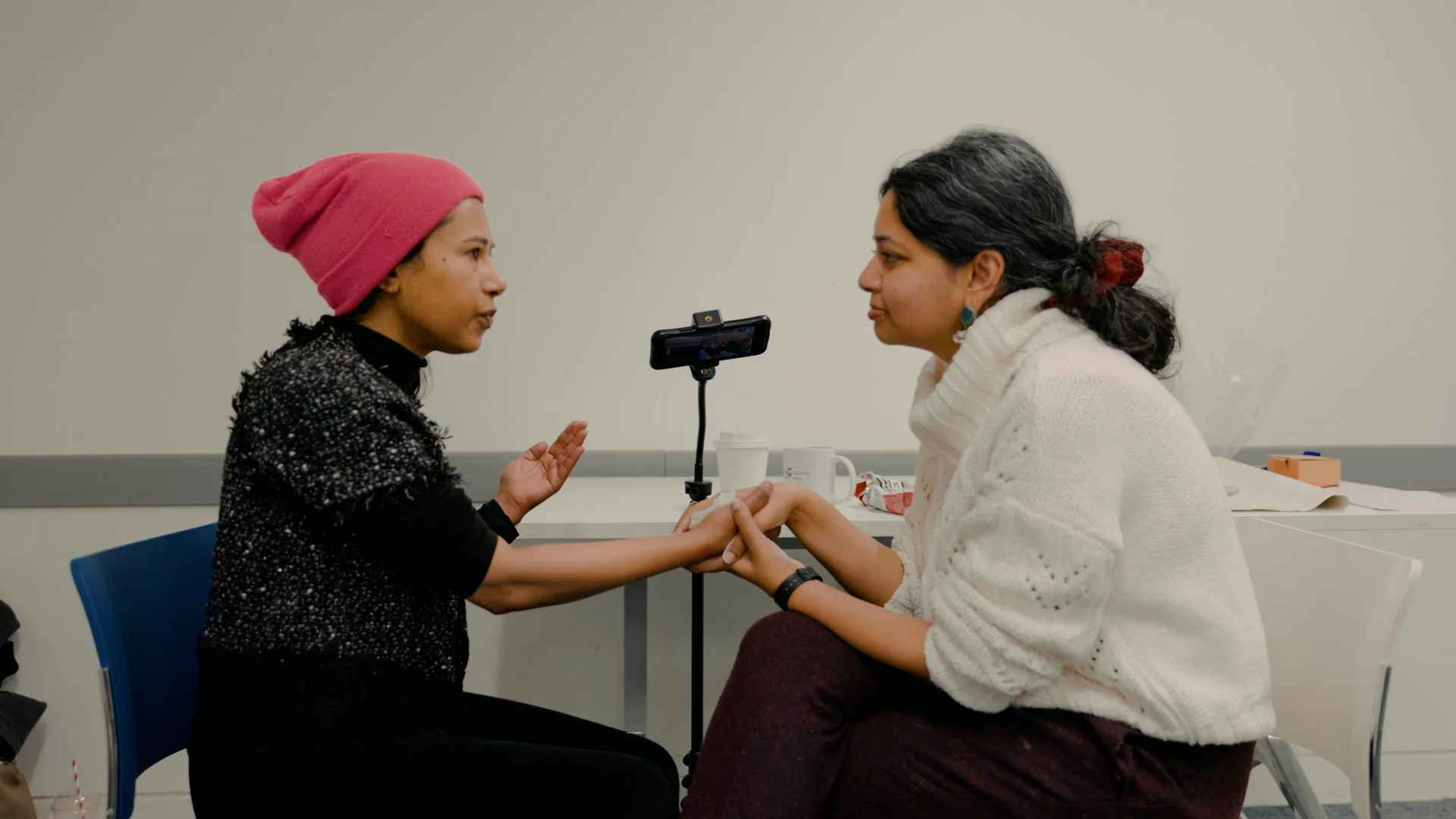
Each session lasts about 15–20 minutes and begins with a small hand-warming ritual. We try a few positions until we find one that feels comfortable, allowing participants to become aware of temperature, touch, and the presence of another body. I then place a piece of clay between our hands. As we wait for the clay to slowly set, we chat. I ask participants about their day, about the weather, about heat in general- how they feel when it is hot, and what memories summer brings to mind. The conversations are fluid. Participants might reflect on how people kept cool when they were younger, how heat affects their mood or energy, or how changes in buildings, green spaces, and city life have shaped their experience of summer. The clay quietly registers the warmth and pressure of our hands while we speak, creating a small collaborative object that holds the trace of the encounter. With consent, these conversations are recorded and later transcribed for creative processing. Alongside this, I make notes and gestural drawings in my notebook after each session, recording my own bodily responses to the encounter and adding an autoethnographic dimension to the work.
One unexpected development in the work at Somers Town has been the way South Asian participants sometimes shift spontaneously into their mother tongues with me- Bangla, Hindi, or Urdu. I am South Asian but I do not actually speak these languages (except for a smattering of Hindi), so I found myself wondering what is at play here. Is it simply the colour of my skin that inspires familiarity? Is it the activity and the element of touch? Are memories and sensory experiences best expressed in a first language? These moments raise important questions about inclusion, and about the limits of English-only research environments.
The format of this workshop is not entirely new territory for me. I have previously worked in this way as a performance artist, and I have come to see it as a powerful format for exploring connection. Those earlier projects taught me something: when people feel genuinely listened to, they share far more than you might expect. I often think about one participant from an earlier project. She waited patiently while others finished their conversations. Eventually she sat down across from me, I explained the activity, and we began. She told me she had just come from the hospital. After months of insisting that something was wrong, and after repeated tests, she had finally been diagnosed with cancer. As she spoke, she began to cry. Quietly at first, and then uncontrollably, for nearly half an hour. I remember simply sitting there with her, saying, “I’m so sorry.” I was grateful that I could be present in that moment, but the experience also raised difficult questions for me about responsibility and boundaries in participatory work. Later, when I transcribed the conversation, I created a visual record of how the dialogue had unfolded. The image below maps the “airtime” we each occupied during the exchange (my speech marked in red, hers in grey) with fragments of dialogue remaining visible within the structure. It is a way of understanding the conversation not just as words, but as a shared rhythm of listening and speaking, of holding hands and holding space.
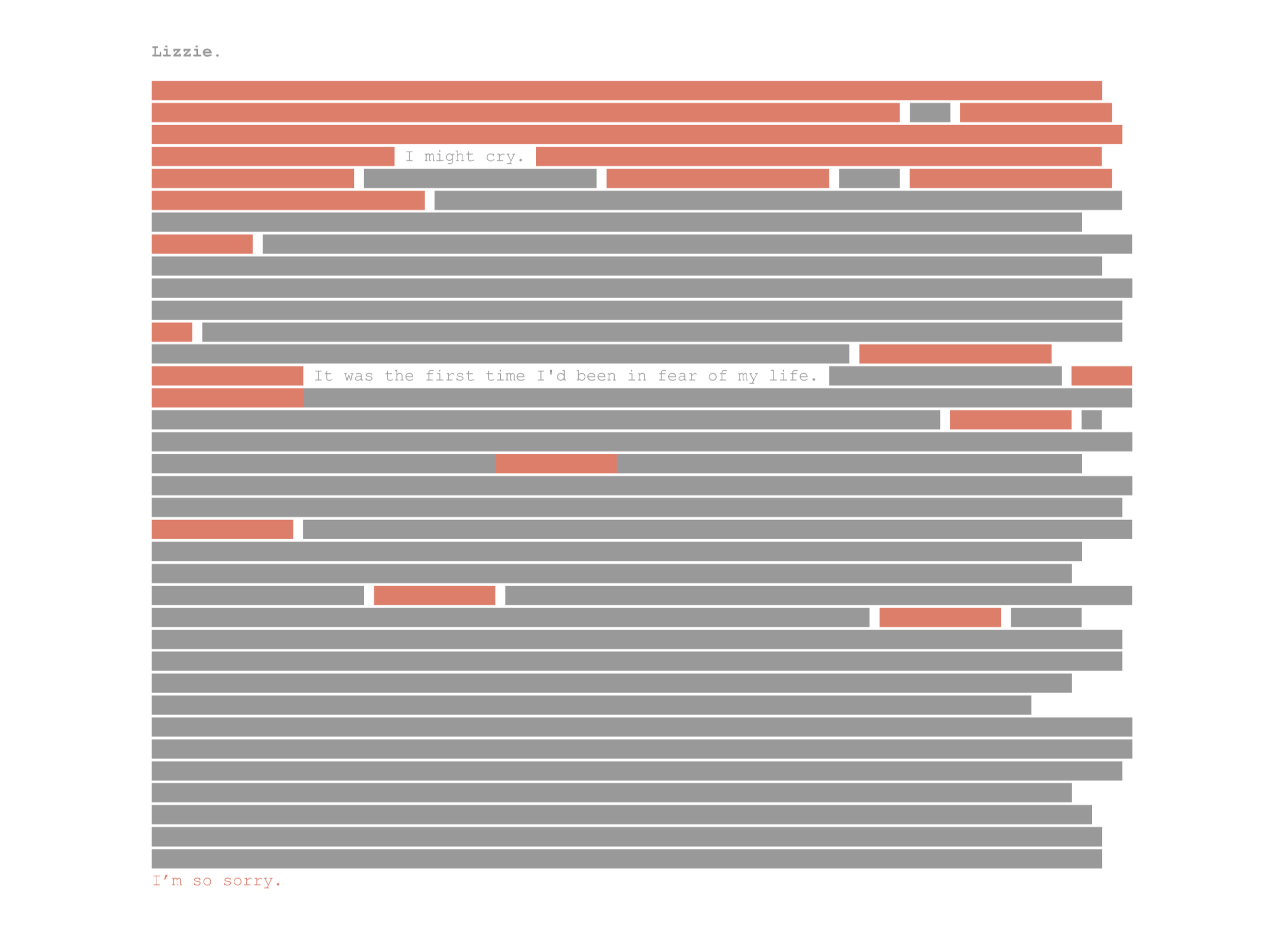
Tactile Language (2024) Bhavana Rao. Digital image derived from a transcribed conversation.
In recent months I have had the opportunity to step back and reflect more carefully on what is actually happening in these encounters. If I were to think of my artistic outputs as data, what kinds of knowledge might they produce? The Melting Metropolis research and conversations with researchers on the team have prompted me to think more deeply about the relationship between embodiment, environmental stress, storytelling, and health. These questions followed me into other areas of my practice, including a shortlisted application to the Wellcome-funded Medical Humanities in Practice Research Fellowship Scheme. As I tried to articulate the core of my inquiry, I found myself thinking beyond touch as a method and towards co-regulated bodily encounters as a way of knowing under conditions of environmental strain. This led me to look more closely at how researchers in other fields analyse lived experience, particularly within medical humanities, which explores how storytelling, embodiment, and narrative shape our understanding of health.
As I try to get to the core of my own inquiry, I am starting to think of the work as generating multi-layered affective data: verbal narratives, mother-tongue expressions, clay deformation as pressure trace, tempo changes in conversation, pauses and silences, and my own bodily counter-responses. How might these layers speak to one another? What becomes visible only when verbal, material, and relational traces are read together? At the same time, participatory work brings its own challenges. When people trust the space you create, they may share experiences that extend far beyond the topic you began with. Conversations about health quickly connect to housing conditions, financial stress, caring responsibilities, and other aspects of everyday life. Listening to these stories requires empathy and attentiveness, but it also raises practical questions: how do you hold that complexity while still focusing on the theme you set out to explore- i.e. heat and its effects on health?
The listening phase of my involvement with Melting Metropolis has now come to a close, and I am beginning the process of revisiting and working with the material that has been gathered. Recordings are being transcribed, notes are being organised, and the clay impressions, drawings, and conversations are being brought into dialogue with one another. The aim remains to contribute to a community-informed artwork about heat, health, and lived experience in Somers Town. The challenge now is to discover what kind of visual story might emerge from these fragments, and how a collection of intimate encounters can be transformed into an artwork that honours the people who shared them. For now, my attention has shifted from gathering stories to listening again to the ones already collected, and to exploring what they might yet reveal.