Planting Seeds at King Manor Museum
It’s easy for trees to quietly fade in the background of New York City streets. But these gentle giants protect against a planet on fire.
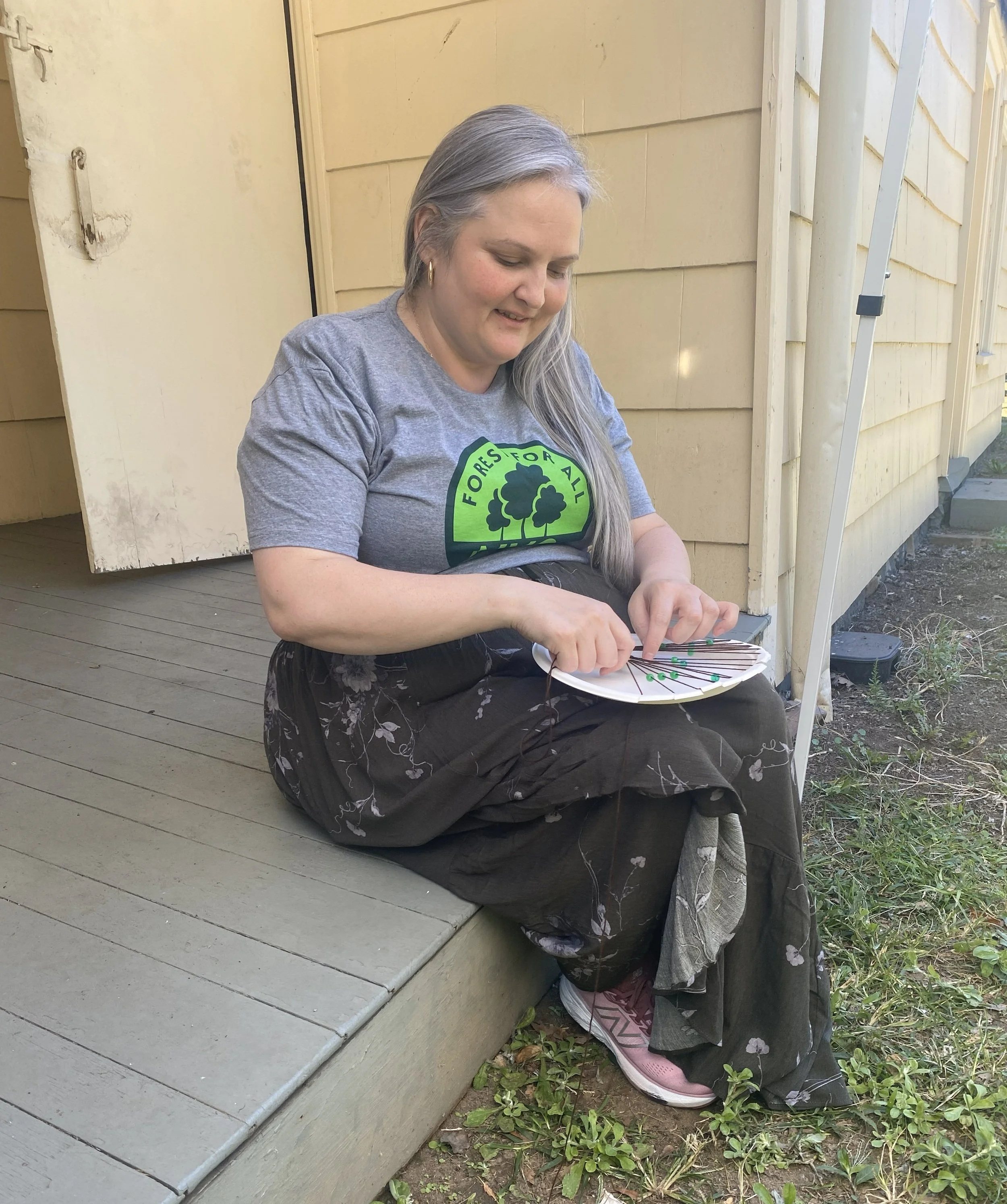
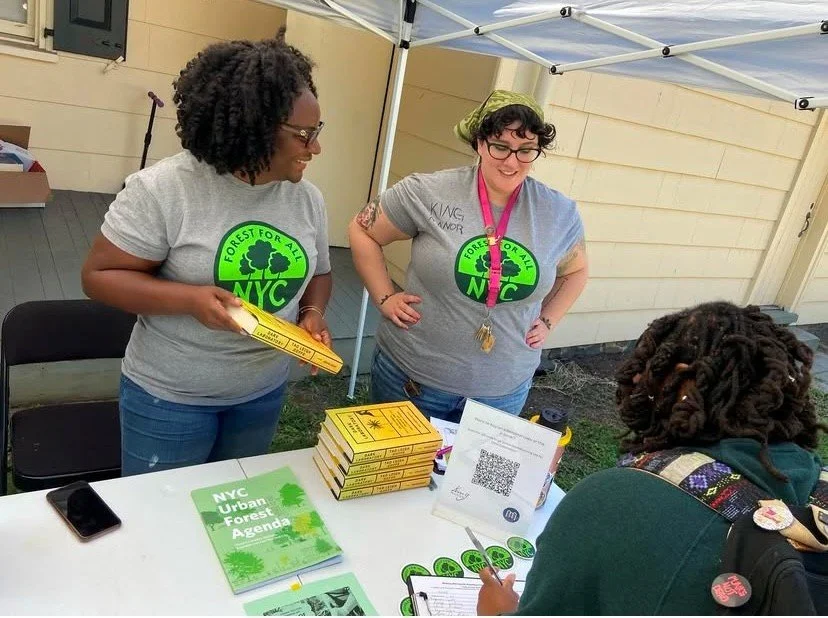
Image descriptions, from left to right:
Bonnie Zervas, curatorial intern at King Manor, prepares tree looming crafts for City of Forest Day 2025. (Photo credit: Roxanne Scott)
Goodies while tabling at King Manor Museum for City of Forest Day 2025. (Photo credit: Roxanne Scott)
Roxanne Scott, storyteller-in-residence, and Veronica Alt, education & program coordinator at King Manor, tabling at City of Forest Day 2025. (Photo credit: Hannah Emple)
In Queens, the borough’s nearly 300,000 trees include the ubiquitous London planetree as well as pin oaks and honeylocusts. These trees stand tall in green spaces such as Baisley Pond Park and Flushing Meadows Corona and line side streets and major corridors alike, including Jamaica Ave, Linden Boulevard and ‘The Conduit.’ Many New Yorkers with homes also grow trees on their property.
On my block in my suburban-light neighborhood in Southeast Queens, Japanese zelkovas, hackberries and green ashes stand in front of two story homes. A silver linden dwells in front of mine. The city’s tree map tells me that this silver linden both intercepts 642 gallons of stormwater and removes a pound of air pollution yearly. All for the low annual price of $80.
This is what advocates try to sell the public on when it comes to the benefits of trees: a low investment with outsized social and health impacts. New York City’s seven million trees guzzle up water from heavy rain, inhale toxins that float in the air and cool down the city when it heats up on a hot day. As summers get hotter from climate change, trees can help mitigate the urban heat island effect. The natural wonders can also be lovely to gaze at.
The Forest For All NYC coalition’s goal is to get the city’s tree canopy to 30% by the year 2035. Currently, the city’s tree cover hovers at nearly a quarter. More than 140 organizations are part of the coalition, made up of sundry organizations including cultural centers, park conservancies and neighborhood groups. Boosting the city’s canopy is significant in neighborhoods such as Jamaica, where King Manor Museum is located. Though the historic house is tucked in Rufus King Park ringed by northern red oaks, horse chestnuts and sweetgums, some sidewalks heading to the museum are left bare. My walk from the Jamaica Long Island Rail Road station to the museum comes to mind. While there are clusters of trees on this particular stretch of The Ave, there are also sections devoid of trees.
The lack of trees goes beyond beautifying streets. The city’s heat vulnerability map shows where New Yorkers are at risk of dying from extreme heat. Neighborhoods are ranked 1-5, five being the highest risk. Jamaica and nearby neighborhoods including Hollis, St. Albans and Springfield Gardens rank highest. Large sections of these predominately Black and Brown neighborhoods are brimming with trees. A neighborhood's heat vulnerability can also include how many homes have air conditioning.
This past October, King Manor Museum participated in City of Forest Day. The annual celebration, backed by Forest For All NYC, raises awareness of the city’s ‘urban forest.’ This year, more than 120 events citywide took place. King Manor participated in the day by allowing attendees (young, old and in-between) to participate in tree looming crafts. The museum also partnered with local artist Rejin Leys to cast tree trunks and make paper at her pulp mobile station as part of her Touch Jamaica exhibit. And King Manor launched a climate-focused reading circle. Our read is Dark Laboratory: On Columbus, The Caribbean and the Origins of the Climate Crisis by Tao Leigh Goffe. Those interested in joining received a free copy of the book (we’re reading the book in sections and our first meet up was in November).
After a successful City of Forest Day, King Manor became part of the Trees For All NYC. It’s the first museum part of the coalition. The museum has more tree-related events coming in 2026. That includes celebrating International Day of Forests and a street tree care event with the local organization Big Reuse.
Planting and maintaining trees are just one aspect of stewarding the city’s landscape and protecting against climate change. It’s fair to say volunteers mulching trees on a Saturday morning is just a small dent. It’s also a seed for (even more) collective action in the climate crisis.