
Anna Ravenscroft, our Community Engagement Lead, joined the Wellcome-funded Carbon Bodies team for their wonderful Into the Cold exhibition launch and panel discussion at Newcastle City Library. Carbon Bodies, based at Northumbria University, feels like a sister project to Melting Metropolis. It’s led by Dr Rebecca Wright, with Dr Kathy Davies as Research Fellow, and “uncovers how the pursuit of warmth and everyday health became increasingly dependent on fossil fuels in twentieth century Britain.”
Into the Cold is a lovely, archive-rich exhibition exploring Britain’s long fight for warmth - although that word “long” is discouraging. You see the same thing again and again: invested communities and campaigns doing amazing work, often dependent on short-term funding, and care that makes a real difference to people’s lives but cannot, on its own, deliver the infrastructure change that is essential.
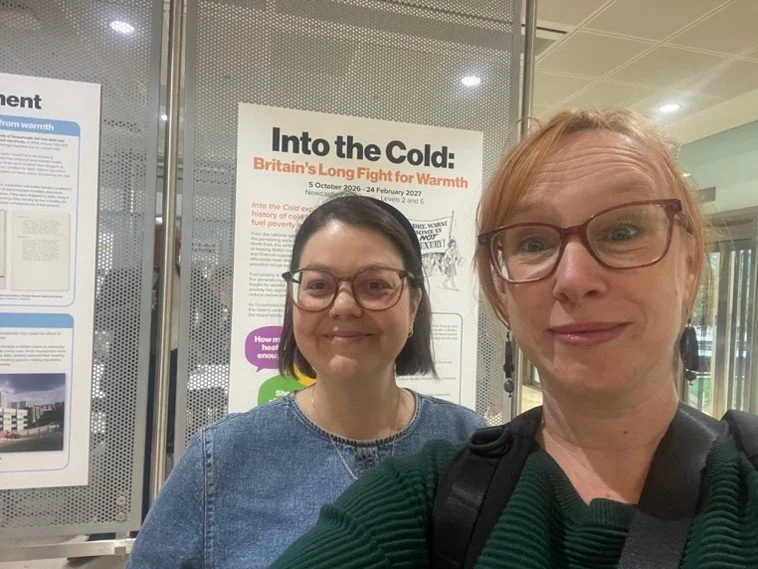
Anna with project curator Kathy Davies.
Two of the panellists - David Green, co-founder of National Energy Action, and Brenda Boardman, author of Fuel Poverty: From Cold Homes to Affordable Warmth - have devoted their careers to tackling fuel poverty. Listening to them left me both impressed and dismayed. As we begin what, in comparison, might be seen as a new fight against the dangers of extreme heat, it is sobering to see how long the struggle for warmth has already been going on.
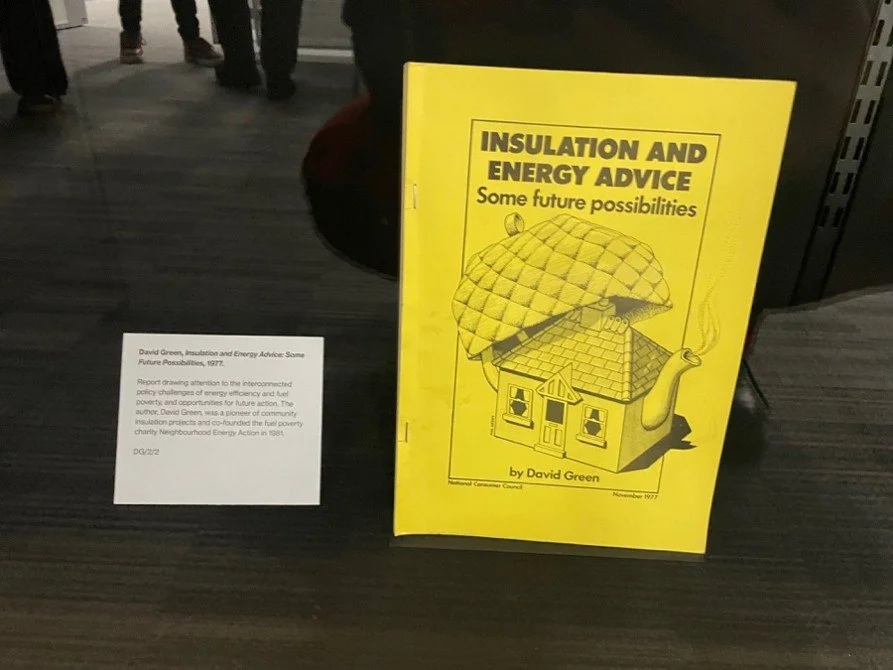
David Green’s 1977 publication, Insulation and Energy Advice.
The exhibition was full of surprises and unexpected connections. I hadn’t understood why energy bills were so high, or the role of marginal cost pricing. I hadn’t realised that Britain is known for having some of the least energy-efficient homes in Europe.
One of these conversations led to a personal story from Brenda about having triple glazing installed in her attic room. Of course, this was before this summer’s extreme heat. Those of us sleeping in attic rooms this summer will attest to, something designed to improve our homes for one season can feel like a curse in another.
It feels essential to bring these conversations together across our projects. How do we build, protect, and plan our cities for all kinds of extreme weather? And how do our homes need to be reimagined?
We are still learning how to connect these issues within wider conversations, how to influence policy, and how to help the public recognise that many of these recurring problems are also solvable.
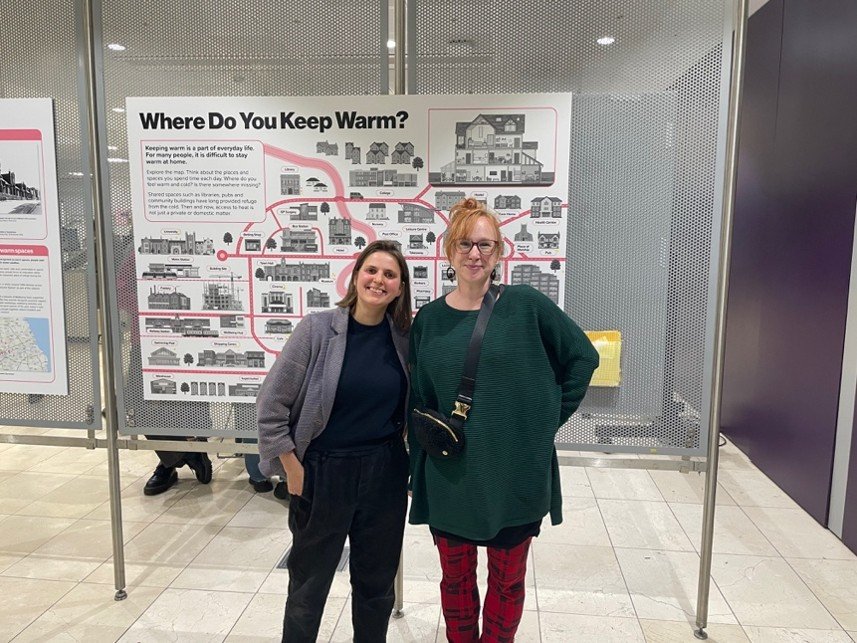
Anna with Rebecca Wright, Principal Investigator of the Carbon Bodies project.
Pictured with Rebecca alongside the Where Do You Keep Warm? interactive exhibition panel. Great Minds! Community partners and storytellers Deepika Kanthavara Madhava and Lianne De Vera have devised a similar workshop. Below is a glimpse of one version, delivered to a cross-sector professional group in Camden and illustrated by Bartlett MAHUE, for our partner organisation Somers Town Community Association.
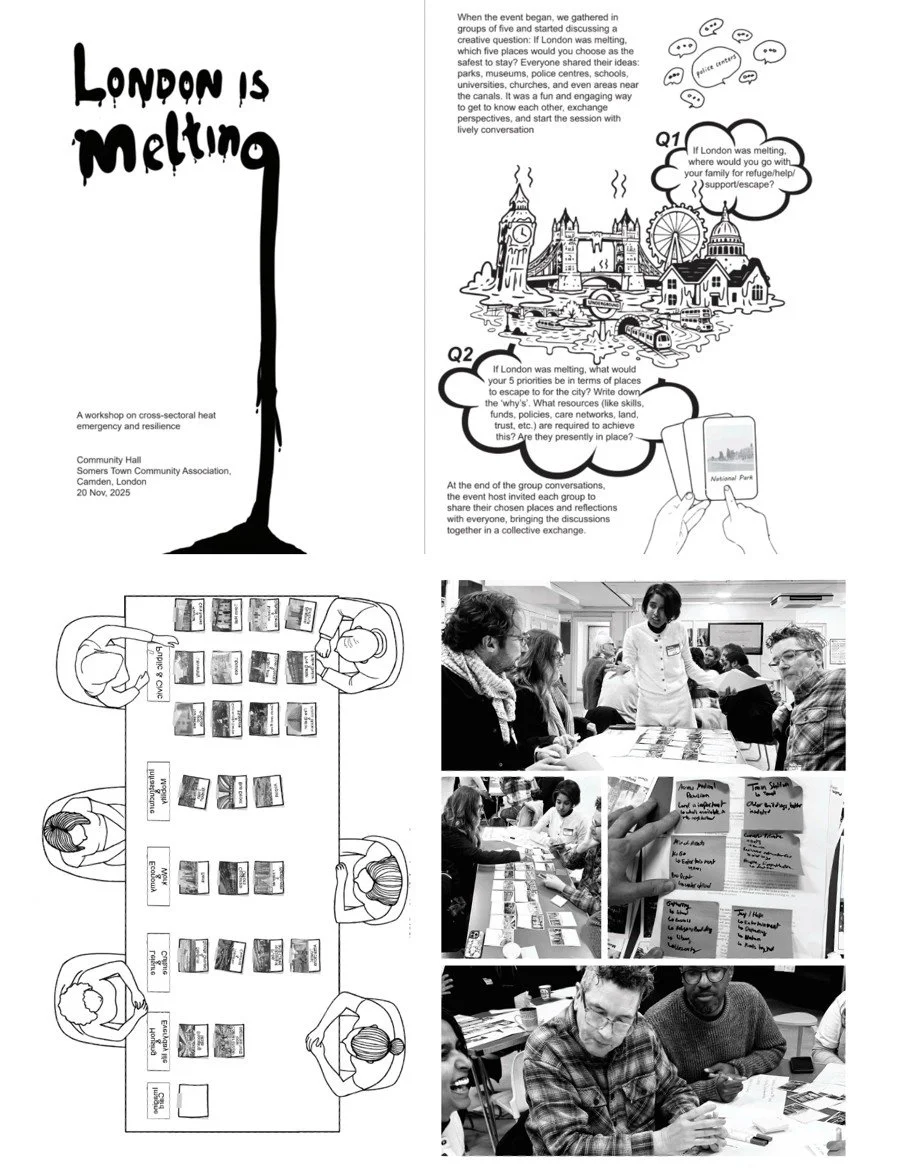
Select pages from Bartlett MAHUE & STCA London is Melting zine.
So the question isn't simply how we keep warm, or how we stay cool. It is how do we live better? How do our cities need to change? And who pays the price when extreme weather hits?
Perhaps, too, we need to ask why the fight is so long when so many of the solutions are already within reach.
The inequalities are embedded, and the challenges are complex. But setting mandatory minimum standards, investing in better homes and addressing fuel costs and inequities could save the NHS, the charities working to tackle these enduring problems, and the people living with their consequences far more in the long run.
Warmth and coolness are not separate challenges. They are both questions of how we care for people, how we design our homes and cities, and whether we are prepared to make the changes that allow everyone to live well.
