
Reflections from Queens College Undergraduate Research Interns
The Queens College Melting Metropolis team hosted two undergraduate research interns for the Fall 2025 semester, Avraham Kuighadush and Kristal Melendez. Both interns did excellent work, and we are pleased to spotlight some of their reflections on the semester here.
[Note: responses have been edited for space].
Avraham: During the fall semester of 2025, I summarized newspaper articles, environmental justice activist materials and governmental studies on heatwaves. I watched the City Council meeting on Intro 998, a bill to codify New York City’s cooling center program. I summarized some of Mayor Rudolph Giuliani’s 1990s heat-related press releases, and created the first ever database of cooling legislation in New York City municipal government.
I found that “cooling” legislation started in 1998 but the first key piece of legislation was from 2006. The total number of relevant legislation is 67. I categorized this legislation into three types of health impacts: upstream health outcomes, midstream health outcomes, and downstream health outcomes. Upstream health interventions focus on societal and structural preventions such as funding more green energy and infrastructure. The most important legislation that affects upstream health outcomes is concerned with energy use and heat conservation, the creation of an Office of Climate Resiliency, and legislation focused on green infrastructure. Midstream interventions focus more on the community by incentivizing communities to check in on at-risk neighbors or cooling centers. The key legislation affecting midstream health outcomes is concerned with workers’ protections and summer and heat preparation. Finally, downstream interventions are the last line of defense because they focus on individuals suffering with a condition such as a hospital helping someone going through heat stroke. The key legislation affecting downstream health outcomes is legislation focused on air conditioning.
All in all, I am thankful for the opportunity to study climate change’s effect on our health and legislation and, hopefully, the work I did can be used to better humanity’s efforts against our heating climate.
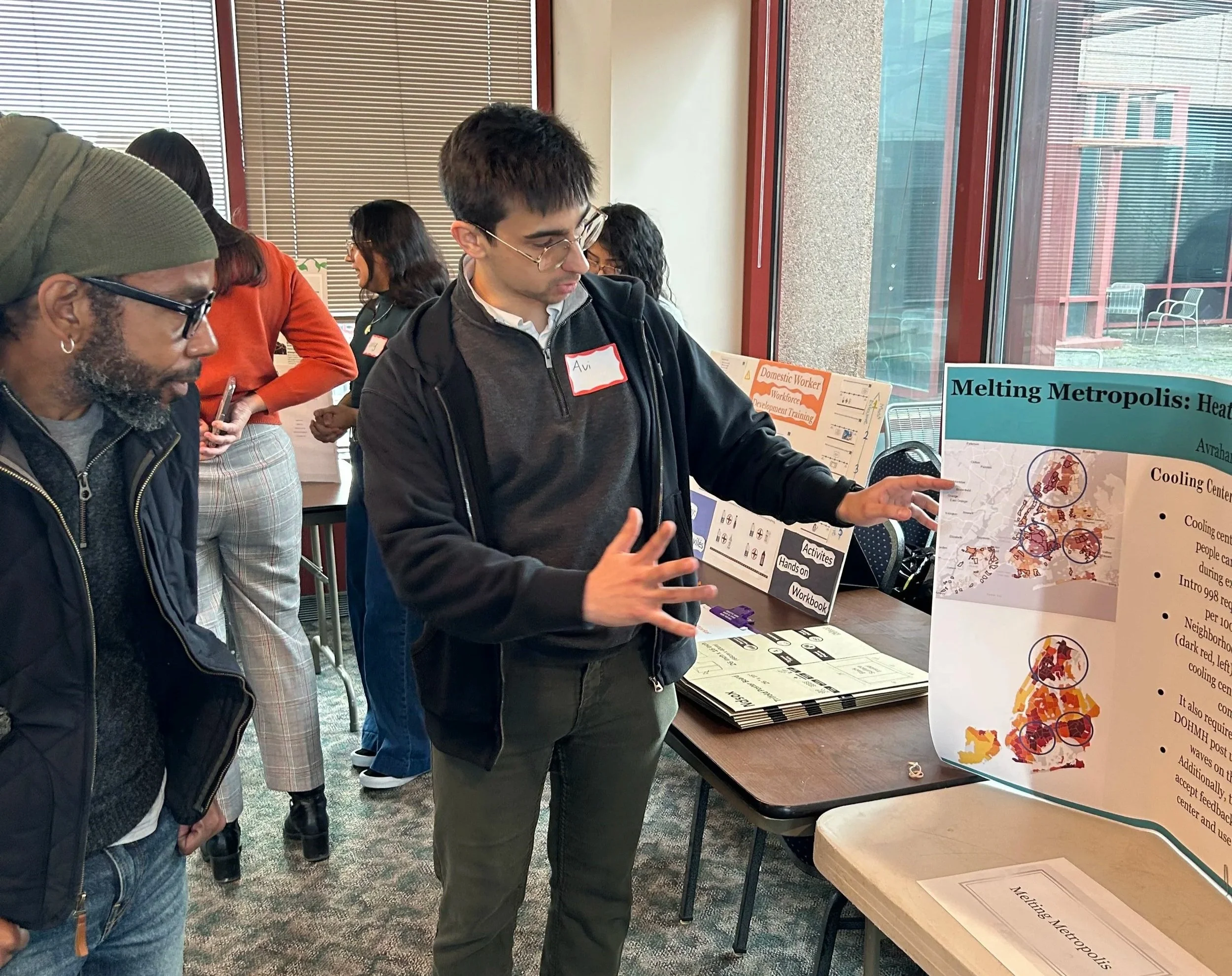
Avraham’s presentation of his work.
Kristal: This semester, I began my study by reading through newspaper articles about air conditioning and energy usage in the home. These articles spanned from the 1970s to the 1980s, and were targeted to homeowners. I logged the articles and their purpose into a spreadsheet, and I analysed how they contributed to our understanding about homeowners' use of air conditioning as the technology was becoming more widespread.
My primary focus this semester, however, was on oral histories. I listened to and transcribed four oral histories in total, which all explored the topics of heat, air conditioning, and social adaptation during times where cooling was inaccessible or not provided. The oral histories I transcribed were of New York City residents who had limited to no access to air conditioners during the summers of their childhood. I presented my transcription work to the larger Melting Metropolis team, and I included excerpts from the interviewees about their experiences with heat and how they dealt with it.
Overall, my work this semester tackled the more personal side of coping with heat and when faced with limited technology. While I transcribed the oral histories, I encountered many different perspectives about how heat impacts people’s lives and how people manage the intense heat. I am extremely lucky and thankful to be given this opportunity to listen to others and transcribe their words, as they have changed how I view heat in New York City. Being able to study in-depth the effects of heat and the limits of technology through oral histories is truly an experience I would never find in a textbook.
The team is thankful for the collegiality and smart work of our interns.