Building a Summer Archive with Community-led Oral Histories
As most researchers on this project would surely agree, finding heat in “the archive” is no small feat. In New York City, there are no library collections or museum backrooms containing boxes of files helpfully labeled “summer heat.” There are very few subject files in archival collections that even come close to the topic. Instead, we’re left to explore all sorts of files in government, institutional, community, or non-profit holdings that may - or more often, may not - include references to summer heat, season policies, infrastructural plans, or neighborhood-based responses to all the above. It’s like finding a needle in a haystack, or if you’ll allow me a bit of license, catching a few sunrays on a cloudy day.
Even when you do find something useful, the information is often recorded from the perspective of municipal officials and detailed top-down in such mind-numbing bureaucratese that the document hardly gestures toward any lived experience, which is central to the research themes of our project. Sure, officials handed out x-number of hydrant caps in the heat-baked neighborhoods of Brooklyn during the 1960s… but what neighborhood groups asked for them, how did residents decide to distribute them, and fundamentally, how did that change hot summer afternoons for local kids seeking cool relief? In short, how does social history intersect with environmental history, especially its policies, past and present?
To answer these questions and begin to redress archival silences regarding heat, our team in New York City decided to build our own archive of summer. Dr Kara Schlichting and I believe that residents’ voices should represent the collection, and in collaboration with several key partners, we decided that oral histories created by local residents would provide an important material record for rewriting the city’s narratives of summer. We started building last summer, and we’re just now gaining momentum this spring.
Our summer archive began almost a year ago. A colleague in the CUNY Climate Hub, which coordinates partnerships between classrooms and organizations affiliated with the NYC-Environmental Justice Alliance (NYC-EJA), reached out to introduce us to a potential partner. Over email and then in-person, we met Shaheeda Smith, Climate Advocate for Good Old Lower East Side (GOLES). We learned about her passion in creating community-led stories about environmental injustice in the Lower East Side (LES), the neighborhood she grew up in, and a part of the city hit hard by Superstorm Sandy in 2012. Moreover, according to the City Health Department’s Heat Vulnerability Index, the LES is a community defined as “heat burdened.” As we shared more about Melting Metropolis and our research on extreme heat, and Shaheeda shared more about local climate concerns and organizing efforts in the neighborhood, a partnership began to form and our project began to take shape.
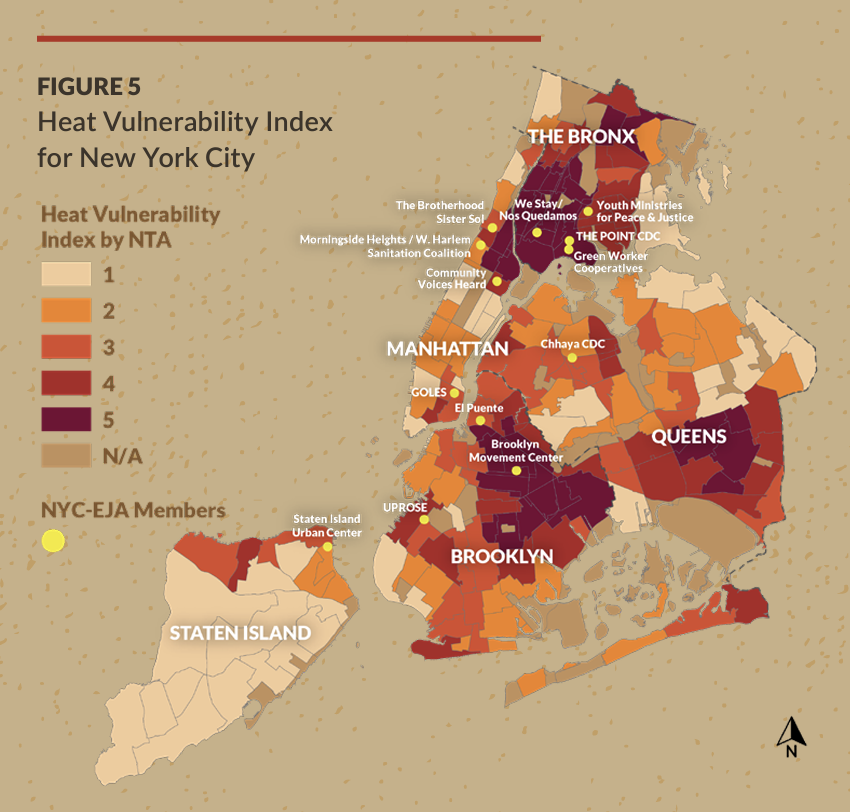
The Heat Vulnerability Index with NYC-EJA members, including GOLES in lower Manhattan. NYC-EJA, Heat-Related Risks, Air Pollution, and Social Vulnerability in New York City (June 2024).
We decided to create an oral history project on extreme heat in the LES, led by residents as stewards of their own community’s history. This was important, as a resident-led project promised to invert hierarchical roles often assumed within a university-community partnership, and with enough intentionality, might recast the power dynamics of knowledge production, content expertise, and narrative authority. Fundamentally, we wanted to challenge the extractive model of community-based research, asking provocatively, who gets to tell their own story? And how will it be preserved for public audiences beyond university systems with their tightly drawn membership requirements?
These questions animated the project’s design from its inception. Over the summer and into the fall, we created four community-based workshops for students and residents of the LES. We wanted attendees to develop three key skillsets over the course of the workshops:
1) learn about the urban heat island effect and how to communicate its origins and stakes for promoting environmental health
2) develop the basics of interviewing and recording oral histories, a DIY-method with 101-level opportunities for practice
3) create narratives as part of a trained cohort of oral historians who have the power to craft new stories of summer and extreme heat in the community
We secured funding from the CUNY Climate Justice Hub and Melting Metropolis, and Shaheeda named the project “+UR Voice: Heat, Home, and Resilience in the LES.” We arranged for our Melting Metropolis repository partner to archive the interviews – Queens Memory Project, a digital collection of oral history projects archived within the New York Public Library system. We co-taught the four workshops in GOLES’s office space, and though attendance fluctuated, we had 10-15 residents participate on a relatively consistent basis. By December the cohort was ready to begin their interviews.
Over the winter and holiday months residents identified their interview subjects and began scheduling the first round of interviews. Now at various stages in the process, including interviewing, transcribing, editing, and archiving, the cohort is continuing their work through the spring. Each cohort member has a final goal of two completed oral histories.
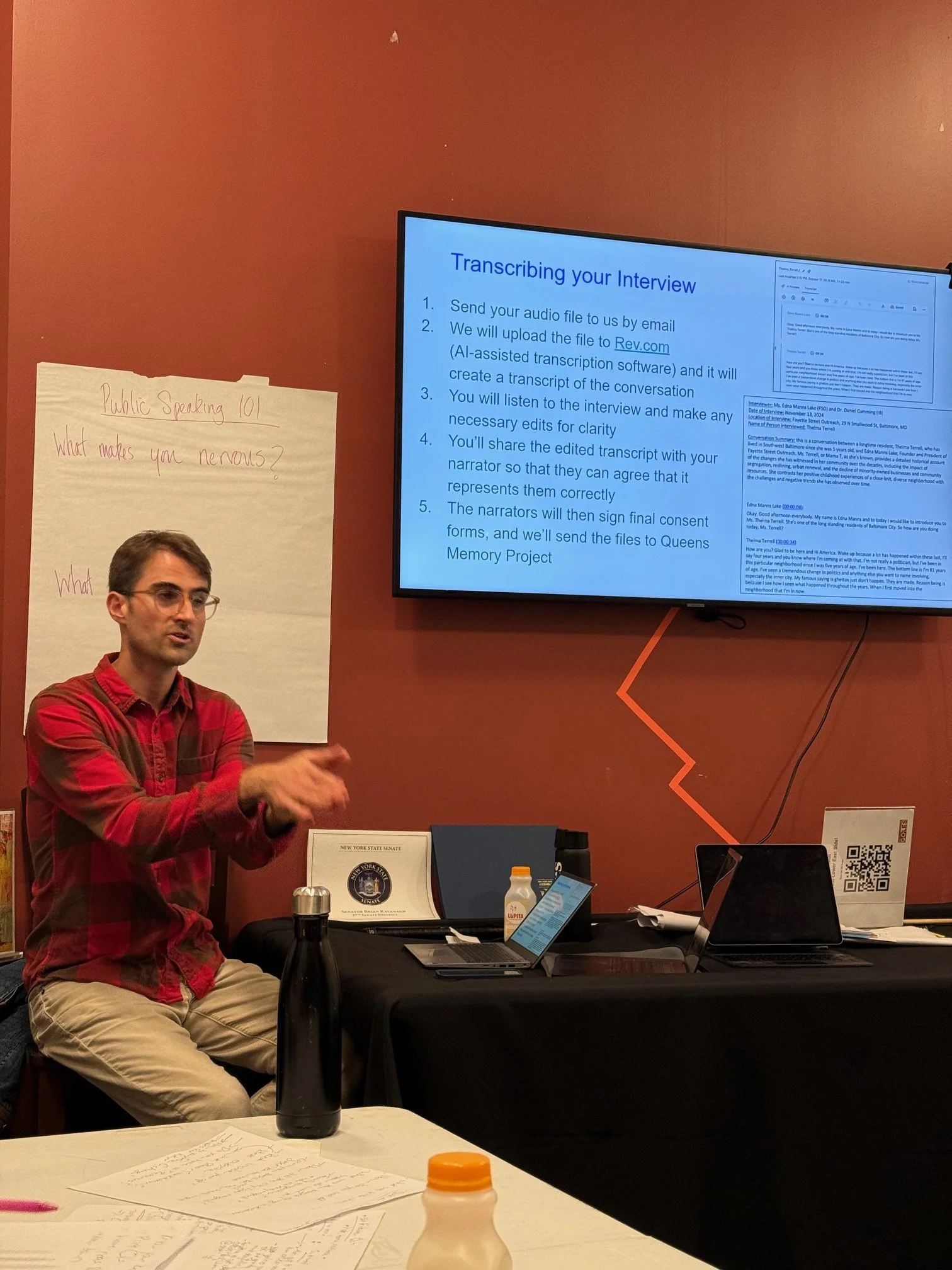
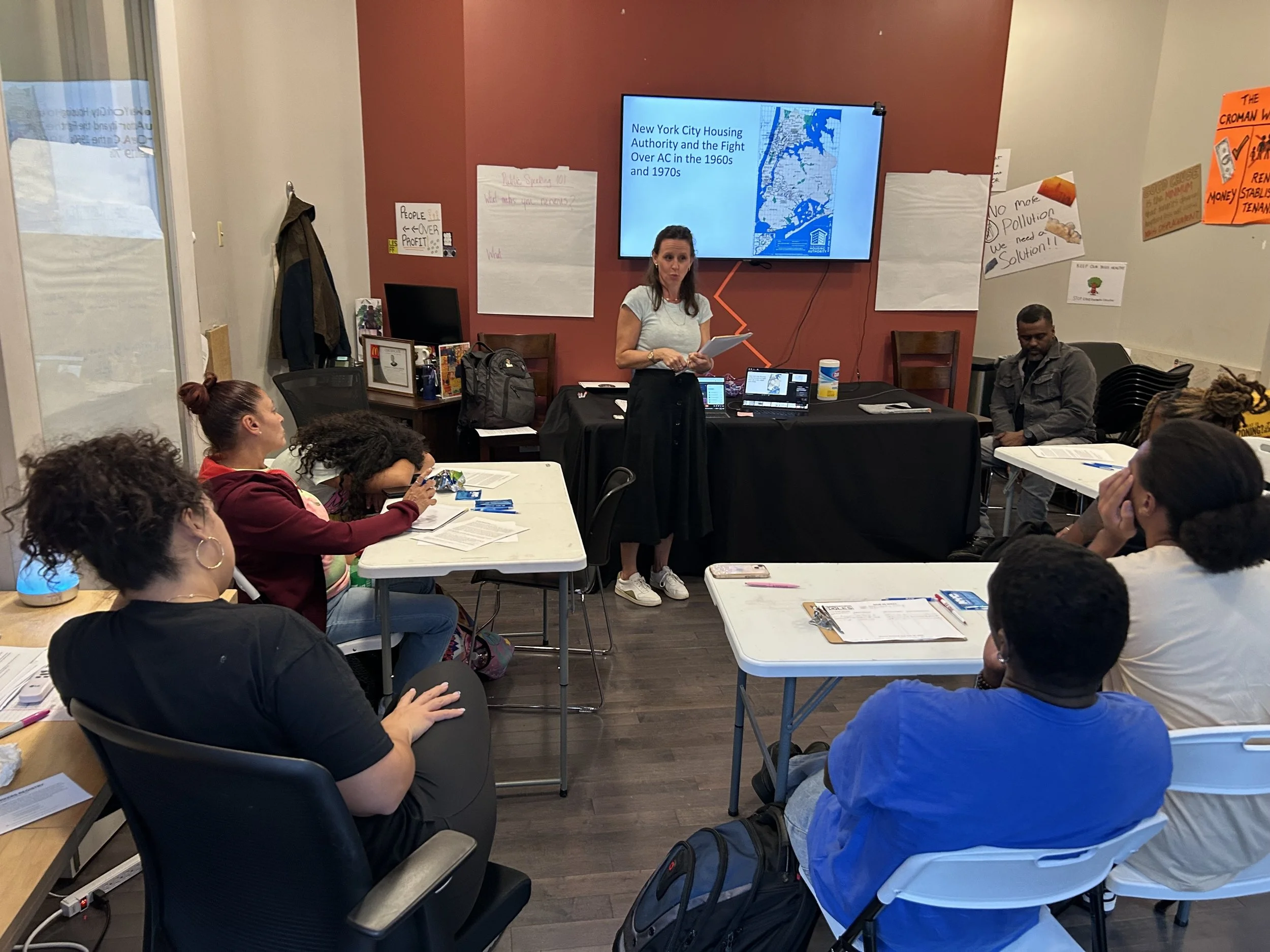
Dr. Daniel Cumming and Dr. Kara Schlichting lead community-based oral history workshops at GOLES, 2025.
This spring, Shaheeda and I also partnered with Professor Bobby Wintermute to co-teach “Oral History: Methods and Applications,” a graduate class at Queens College. The course has 16 masters’ students, and Melting Metropolis is the course’s official project partner. Over the next several months each student will create an oral history with a resident of the LES community, and by the end of the semester, we plan to add these final projects to the summer archive. By the start of summer 2026, we should have 20-30 oral histories recorded, transcribed, and deposited with Queens Memory Project, offering a grassroots, bottom-up, perspective of summer in the city that can’t be found in any other archive throughout New York.
To kick-off the project, we held a “meet and greet” in a local marketplace on a recent Sunday afternoon. Nearly 30 people, students and residents alike, mixed and mingled over pizza. Attendees got to know one another by talking about their experiences in the neighborhood, childhood memories, and of course, how hot our summer seasons are getting. With tango music playing in the background – an unexpected, though not unwelcome, addition after we realized we had to share the public space with a class offering free dance lessons – the “meet and greet” served as an important foundation for building relationships. And by matching students and residents for the semester, the event also served as a conversation starter for what will surely become fantastic interviews in the coming weeks.
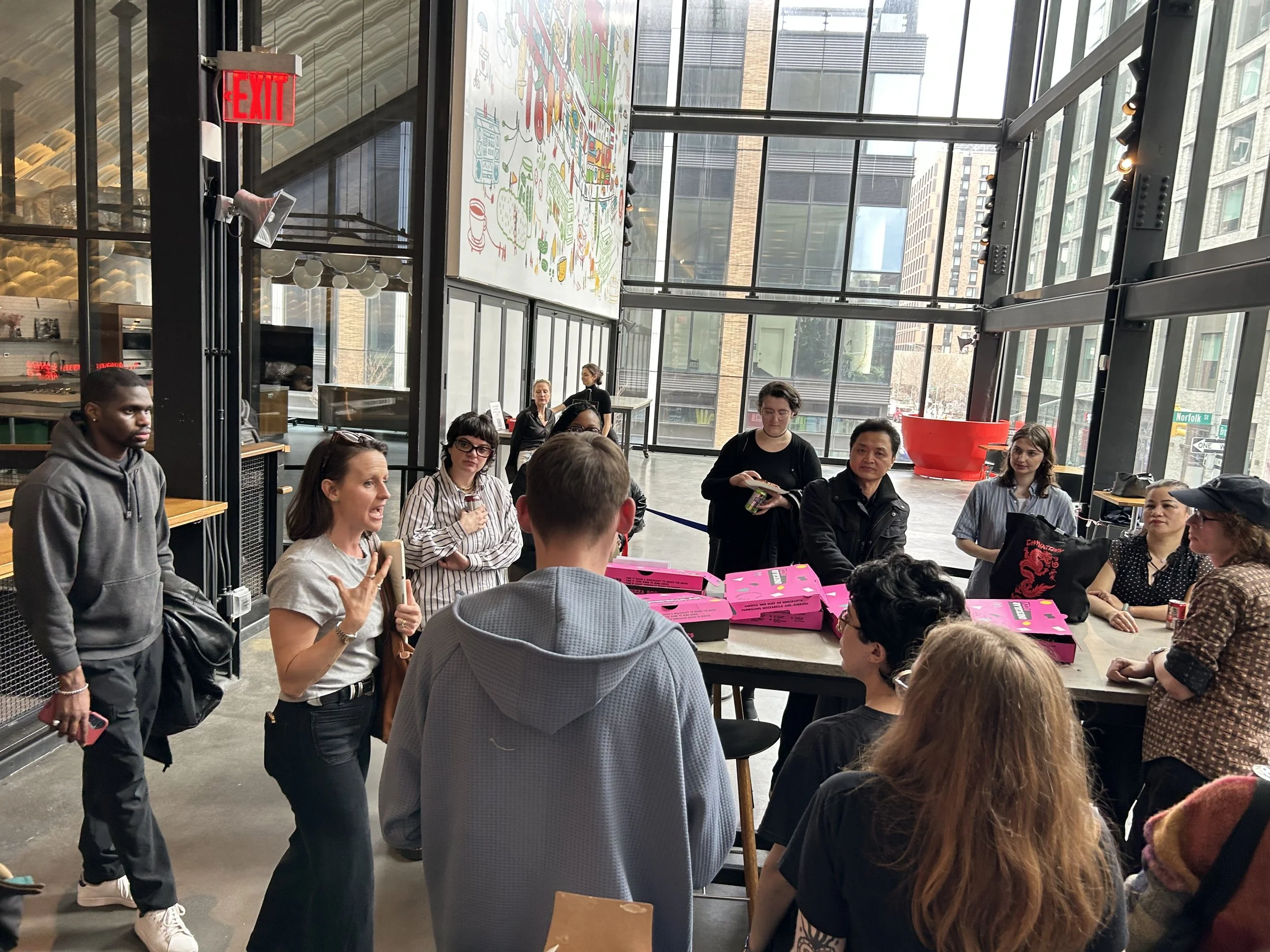
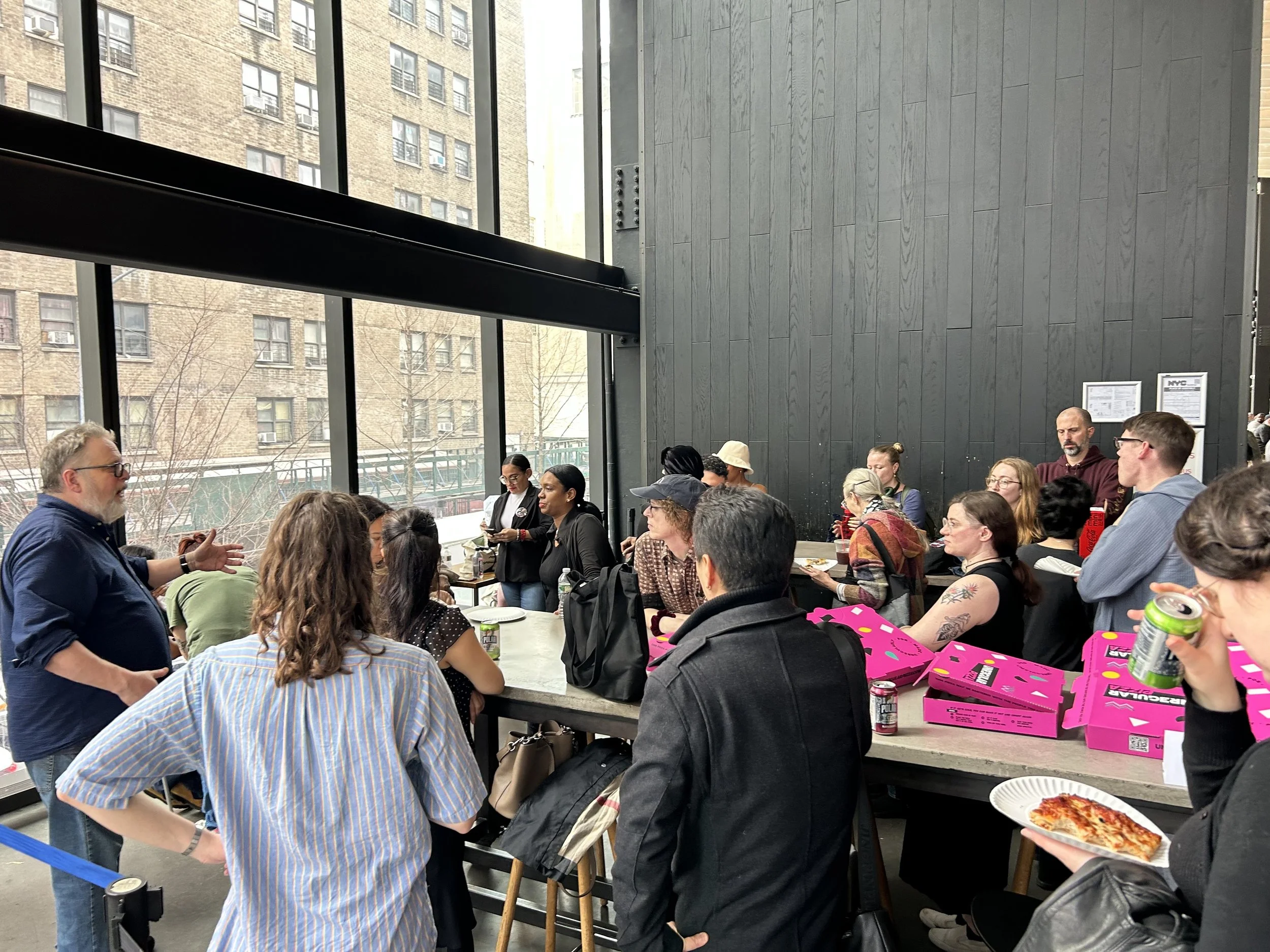
Dr. Kara Schlichting and Dr. Bobby Wintermute speak to students and residents at the LES “meet and greet,” 2026.
At this time of this post, students are now conducting their interviews. We’ll have much to learn as we go, but it’s exciting to think about the incredible personal and intergenerational histories that will be shared over the coming weeks. LES participants range in age from early 20’s to late 70’s! At the same time, our original cohort of oral historians are continuing their work in the community, building on their organic relationships and enriching the summer archive as it takes shape. If you happen to be a New York City resident – and especially if you live in the LES, though it’s not required that you do – we’d love to hear from you about your memories of summer and experiences with extreme heat.